

Your reputation is everything. Reviews, social media mentions, and AI-powered search results are shaping how people perceive your brand before they ever walk through your door or visit your website. For multi-location businesses and franchises, that’s a lot of conversations to keep up with.
The good news? Trust drives conversions. More clicks, more customers, more growth. And with the right reputation management strategy, you can take control of that narrative and turn it into one of your biggest competitive advantages. In this blog, Megan Lehrich, VP of Product Customer Experience & Insights, goes over the ins and outs of reputation management, so that you can learn how to turn customer feedback into measurable business results.
What You’ll Learn:
- What Is Online Reputation Management?
- Why Reputation Management Matters for Your Business
- Core Components of Reputation Management
- Common Reputation Management Challenges
- Best Practices for Managing Your Reputation
- How Reputation Management Impacts Growth
- How Rallio Helps You Manage Your Reputation at Scale
- FAQs
Expert Opinion on Why Reputation Management Matters for Businesses
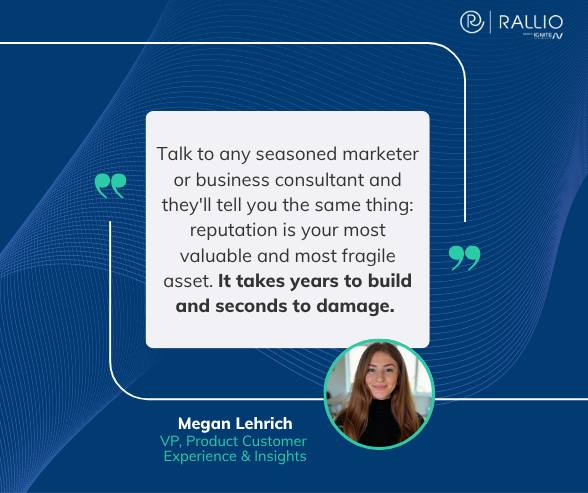
Talk to any seasoned marketer or business consultant and they’ll tell you the same thing: reputation is your most valuable and most fragile asset. It takes years to build and seconds to damage.
A single negative review can go viral, and an unanswered comment can snowball into a PR crisis if you don’t act quickly. Businesses that treat reputation management as an afterthought are playing a dangerous game.
The shift happening right now is from reactive to proactive. The most successful multi-location brands aren’t waiting for bad reviews to roll in before they respond. They’re actively monitoring their brand perception, consistently engaging with customers, and building systems that protect and strengthen their reputation every single day.
What Is Online Reputation Management?
Online reputation management is the practice of monitoring, influencing, and maintaining how your brand is perceived across the web. It involves building a presence that earns trust at every touchpoint.
For multi-location businesses, brand reputation management includes:
- Reviews: What customers are saying on Google, Yelp, Facebook, and beyond.
- Social media mentions: How people are talking about your brand in posts, comments, and stories.
- Customer feedback: Direct input from customers that reveals what’s working and what isn’t.
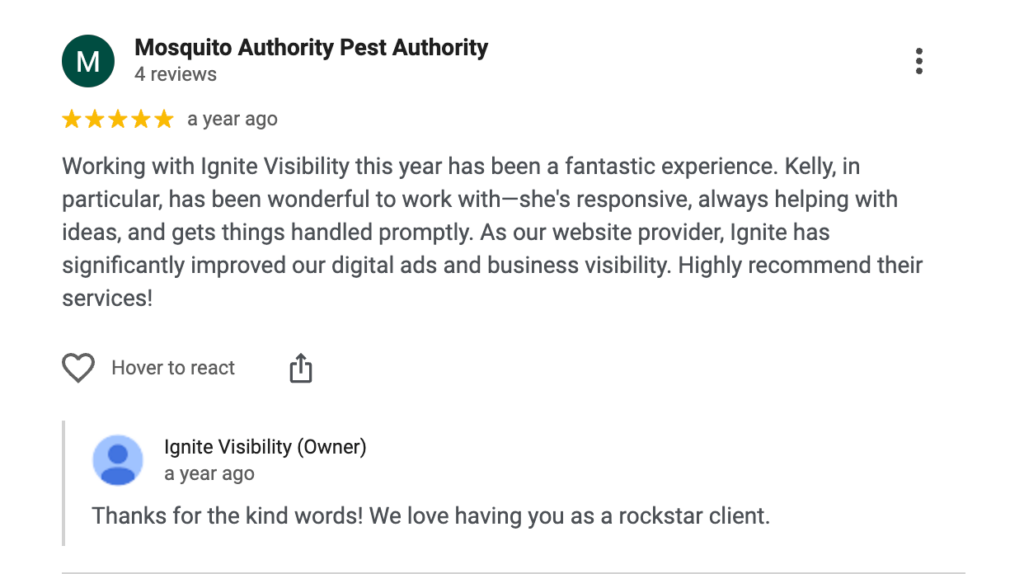
The biggest shift in reputation management strategy over the last few years is the move from reactive to proactive.
Reactive reputation management means responding to problems after they happen.
Proactive reputation management means building systems that prevent small issues from becoming big ones and creating so many positive touchpoints that your brand reputation becomes unshakeable.
Why Reputation Management Matters for Your Business
To put it simply: customers trust other customers.
Before someone chooses your business over a competitor, they check your reviews. They scroll your social media. They look for signs that you’re reliable, responsive, and worth their time and money. The way you are perceived directly influences whether people choose you.
Humans aren’t the only ones concerned with your business’s reputation. Social media online reputation and search visibility are also deeply connected.
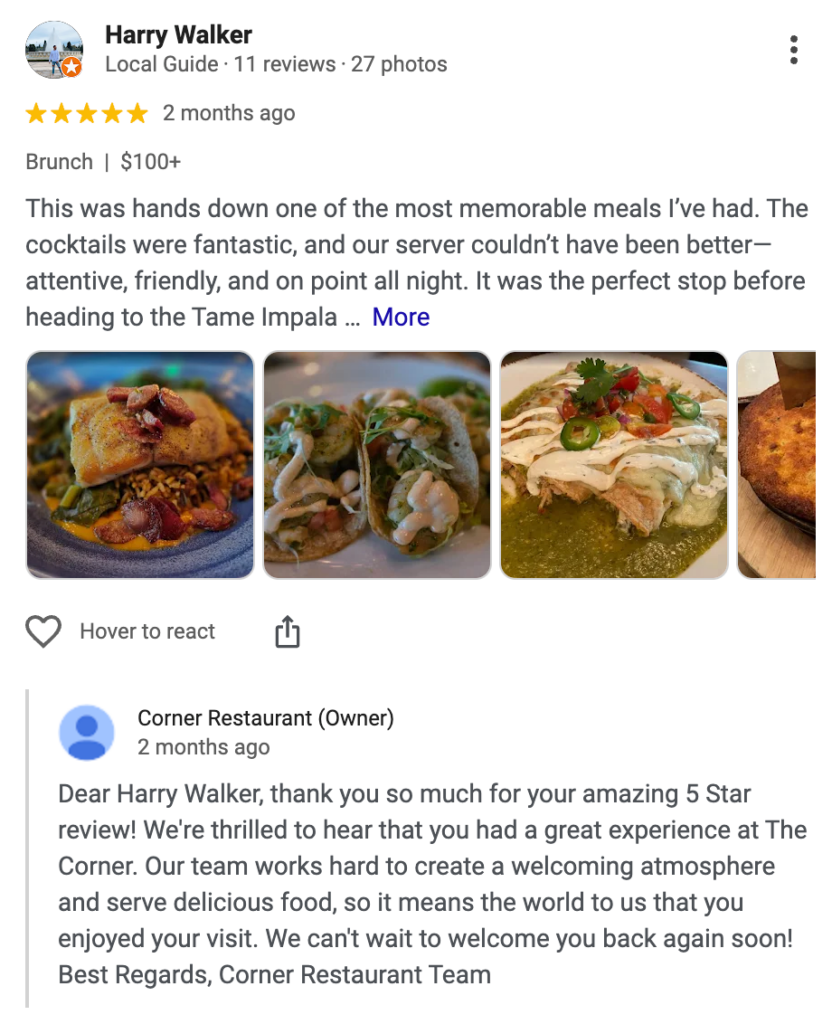
Google factors in review quantity, recency, and ratings when determining local search rankings. Businesses with more positive reviews and active engagement tend to rank higher. This makes reputation management both a function of customer service and an SEO and customer acquisition strategy, too.
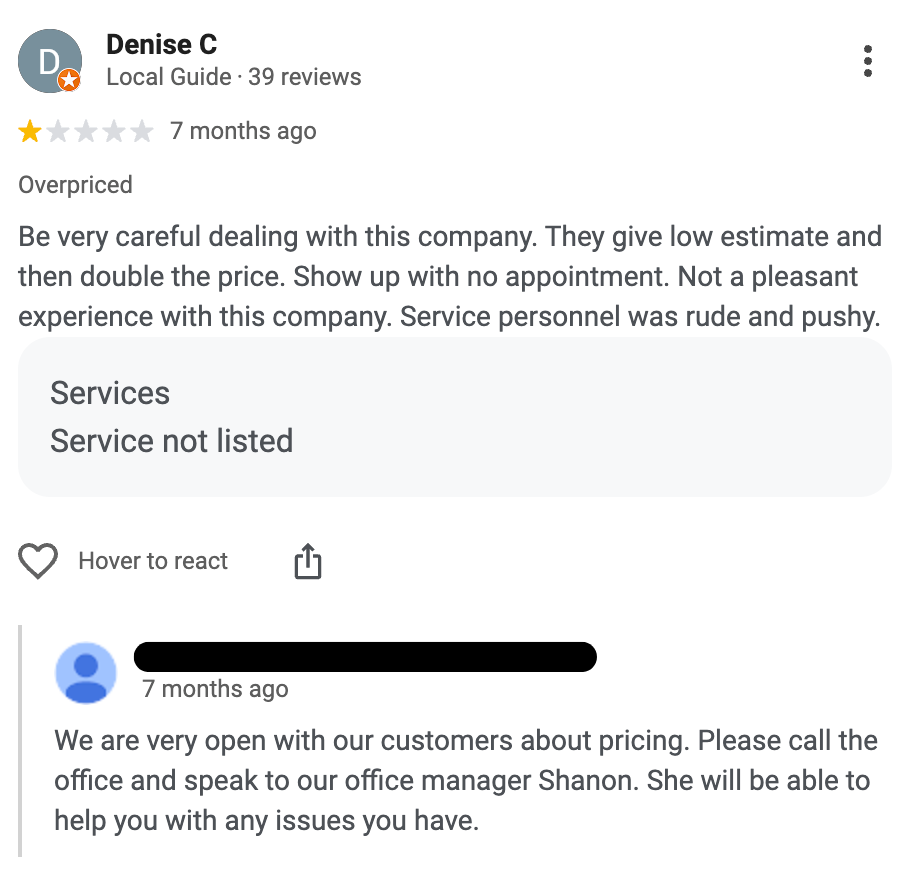
When negative feedback goes unmanaged, it spreads fast. One bad review left without a response signals to potential customers that you don’t care. At scale, across dozens or hundreds of locations, that can do serious damage to your brand reputation and your bottom line. Retention and loyalty suffer. Growth stalls. The cost of ignoring your reputation is far greater than the cost of managing it.
Core Components of Reputation Management
A solid reputation management strategy is built on five core components that work together to protect your brand, build trust, and drive growth. Those components include:
- Review Management: Monitor and respond to reviews across all platforms regularly. Every review, positive or negative, is an opportunity to show customers you’re listening.
- Social Listening: Track mentions, hashtags, and sentiment across social media channels. Social media reputation management means staying ahead of the conversation before it gets away from you.
- Customer Experience: Your reputation is built one interaction at a time. Consistently positive customer experiences are the foundation everything else is built on. No amount of review responses can compensate for a poor product or service.
- Crisis Management: When something goes wrong, speed and transparency matter more than anything. A quick response can turn a potential PR disaster into a demonstration of your brand’s integrity.
- Brand Advocacy: Happy customers and engaged employees are your most powerful marketing asset. Encourage them to share their experiences, leave reviews, and spread the word. Authentic advocacy builds trust faster than any ad campaign.
Common Reputation Management Challenges
Managing reputation across a single location is challenging enough. Across dozens or hundreds? It’s a whole different ball game. Here are the most common hurdles multi-location businesses and franchises face:
- Managing multiple locations and accounts: Keeping tabs on reviews and mentions across every location requires systems, not just effort.
- Keeping responses consistent: Brand voice can drift quickly when multiple people or teams are responding to reviews and comments.
- Responding quickly at scale: Customers expect fast responses. Delivering that across hundreds of locations without the right tools is nearly impossible.
- Turning negative feedback into positive outcomes: Negative reviews sting, but they’re also valuable data. The challenge is handling them in a way that recovers the customer relationship and improves the business.
Best Practices for Managing Your Reputation
The difference between brands with a positive reputation and those that struggle often comes down to consistency and intentionality. Here are the best practices for reputation management in business:
- Respond to every review quickly: Even a short, genuine response shows customers they matter.
- Stay consistent with brand voice: Use brand guidelines to ensure that every location, platform, and response uses the same consistent voice.
- Encourage positive reviews: Make it easy for happy customers to leave feedback. A simple ask at the right moment goes a long way.
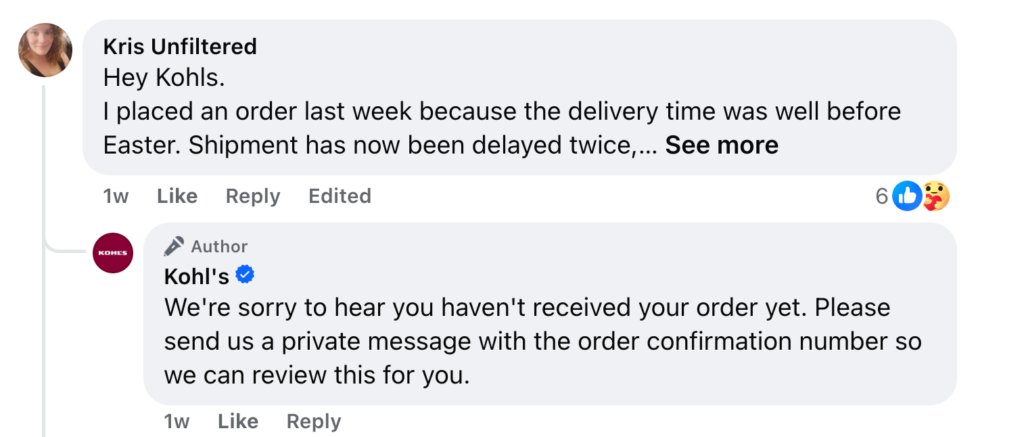
- Address negative feedback transparently: Don’t delete, deflect, or get defensive. Acknowledge the issue, apologize where appropriate, and offer a solution.
- Monitor all channels regularly: Check reviews, social mentions, and direct messages to keep a pulse on what your customers are saying about you.
How Reputation Management Impacts Growth
When handled correctly, reputation management will protect what you’ve built and help you grow because:
- Better reviews = higher conversions: Consumers tend to shift toward businesses with higher ratings and more recent reviews.
- More engagement = stronger brand presence: Active, responsive brands build stronger relationships with their audiences and greater online visibility.
- Feedback = smarter business decisions: Patterns in customer feedback reveal operational gaps, training opportunities, and unmet needs.
- Trust = competitive advantage: In a crowded market, reputation is often the deciding factor. Brands that are known for being responsive, reliable, and customer-focused will outperform those that aren’t.
How Rallio Helps You Manage Your Reputation at Scale
Managing reputation across multiple locations manually is a recipe for burnout. Rallio gives you the tools to stay on top of your brand reputation without the endless manual work.
Here’s what that looks like in practice:
- Centralized dashboard: No more jumping between platforms or missing critical feedback. Rallio lets you monitor and respond to reviews across all your locations from one place.
- AI-powered responses: Save time with intelligent response suggestions that sound human, not robotic.
- AI Playbook: Maintain a consistent brand voice across every location and every team member responding on your behalf.
- Rallio AI Assistant: Our AI tools will help you spot trends and address issues before they escalate.
- REVV Review Accelerator: Proactively generate more positive reviews from your happiest customers with the help of our review tools.
- Actionable insights: Turn customer feedback into data your team can actually use to make smarter business decisions.
With Rallio, you stay consistent, responsive, and on-brand across every location, every platform, every day – without bouncing between a million different tools and platforms.
Frequently Asked Questions About Reputation Management
1. What is reputation management?
Reputation management is the process of monitoring, influencing, and maintaining how your brand is perceived online and offline. It includes managing reviews, social media mentions, and customer feedback. The goal is to build and protect a positive brand image that drives trust, loyalty, and business growth.
2. Why is reputation management important for businesses?
Your reputation directly impacts whether customers choose you over a competitor. Strong reputation management builds trust, improves search visibility, increases conversions, and supports customer retention. For multi-location businesses, it also ensures brand consistency, so every location reflects the same standard.
3. What channels impact your brand’s reputation the most?
Google reviews, Facebook, Yelp, and social media platforms have the biggest impact on brand reputation because they’re the first places consumers look. Google reviews in particular influence both consumer decisions and local search rankings. Social media reputation management also plays a major role, as mentions and comments can spread quickly and shape public perception.
4. What are the biggest challenges in managing a brand’s reputation?
The biggest challenges in brand reputation management include maintaining consistency across multiple locations, responding to reviews quickly at scale, and turning negative feedback into positive outcomes. For franchises and multi-location businesses, the added complexity of managing many accounts and teams makes a centralized, systemized approach essential.
5. Can reputation management be scaled or automated?
Yes, and for multi-location businesses, it has to be. Tools like Rallio make it possible to monitor reviews, respond at scale, analyze sentiment, and maintain brand voice across every location from a single platform. Automation handles the heavy lifting so your team can focus on delivering great customer experiences.
Take Control of Your Brand Reputation With Rallio
Your reputation is being shaped right now in reviews, social posts, and search results across every one of your locations. The question is whether you’re in the driver’s seat or just along for the ride.
Rallio makes it easy to manage your social media online reputation at scale. Our platform has all of the tools, technology, and support you need to stay consistent, responsive, and trusted no matter how many locations you’re managing.
Ready to take control? Contact Rallio today to learn how our platform can help you build a brand reputation you can be proud of.

With over six years of experience in digital marketing and client strategy, Megan Lehrich is a VP of Product Customer Experience & Insights at Rallio, an award-winning social media and reputation management platform recently acquired by Ignite Visibility. With deep expertise in franchise and travel marketing, Megan leads strategic relationships across large-scale national and global brands — helping hundreds of local businesses grow through intelligent content syndication, localized social media, and AI-powered engagement tools.