
If you’re managing social media for a multi-location brand or franchise, you already know how many choices and decisions go into it. Algorithms are constantly shifting, attention spans are short, and your audience expects content that feels relevant at all times.
To get noticed in an environment like this, you need to stop thinking of it as organic vs paid social media and start thinking about how to blend the two strategically. This is an essential approach, especially for multi-location businesses, for building awareness, driving conversions, and growing at scale.
Expert Opinion on the Paid vs Organic Media Marketing Differences
When brands ask whether they should invest in organic or paid media, my answer is always the same: both, but with intention. Too often, businesses treat them as an either/or decision, usually defaulting to paid when they want quick results and letting organic fall to the wayside. But that’s a short-term mindset that creates long-term problems.
Organic social media is what builds your reputation. It’s how your audience gets to know who you are, what you stand for, and why they should trust you. Paid media is what accelerates your growth. It puts your message in front of people who may have never found you otherwise.
The most successful multi-location brands I’ve seen are the ones that treat organic and paid as partners, not competitors. They use organic to build credibility and community, and paid to amplify what’s already working. That’s the formula.
What Is Organic Social Media?
Organic social media refers to the content you publish on social platforms without paying to promote it. It’s your everyday presence. It’s the posts, stories, videos, and conversations that naturally show up in your followers’ feeds and reflect who your brand is at its core.
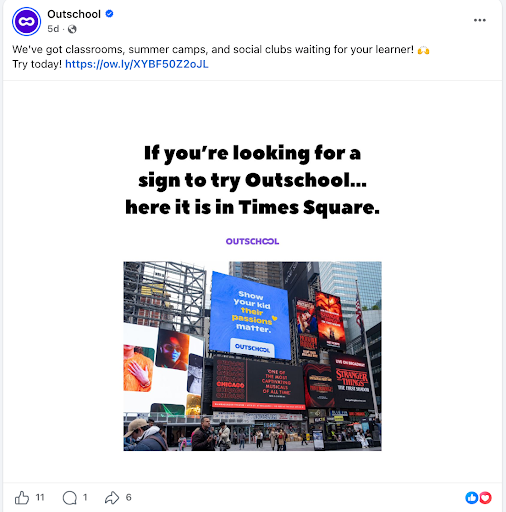
Some common examples include:
- Everyday social posts: updates, announcements, behind-the-scenes content, and brand storytelling
- Community engagement: responding to comments, joining conversations, and interacting with your audience
- User-generated content (UGC): customer photos, reviews, and testimonials shared by real people
- Reviews and comments: public feedback that builds social proof and credibility
- Educational videos and blogs: content that informs, adds value, and positions your brand as a trusted resource
Benefits of Organic Social Media
Organic social media is how most brands build trust. Consistent, authentic content tells your audience that you’re credible, reliable, and worth following. Organic content also improves your brand’s authenticity by letting your brand’s personality shine through in ways paid ads simply can’t replicate.
Your community is also encouraged to engage with your organic social media. That engagement not only builds a community but also boosts your AI visibility.
Challenges of Organic Social Media
Organic media isn’t without its hurdles. It’s important to go in with realistic expectations.
Building an engaged audience takes time and effort, so the growth is slower. Sporadic posting can stall momentum and hurt engagement.
Algorithmic changes also affect your growth. With platforms favoring paid media over organic reach, many brands have seen their reach decline.
What Is Paid Social Media Advertising?
Paid social media advertising is when you pay to promote your content or ads on social platforms to reach a broader or more targeted audience. While organic media relies on earning reach, paid advertising social media lets you buy it, with the added advantage of choosing exactly who sees it, when, and where.
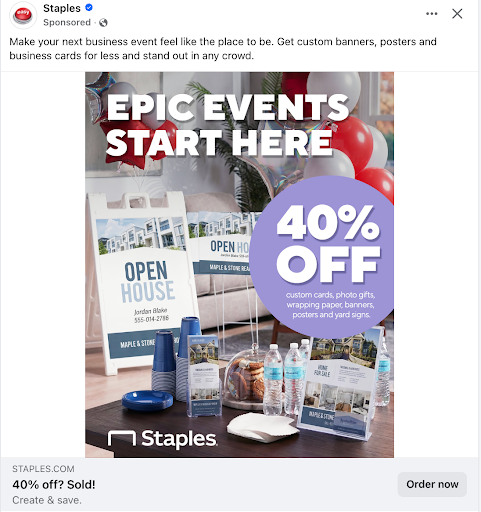
Paid advertising on social media spans a wide range of formats and platforms, including:
- Facebook and Instagram ads: the most widely used paid social formats, offering robust targeting and creative options
- TikTok ads: a fast-growing paid channel with strong reach among younger demographics
- LinkedIn sponsored posts: ideal for B2B brands targeting professionals and decision-makers
- Paid search campaigns: ads that appear in search engine results, targeting users actively looking for your product or service
- Boosted posts: a simple entry point into paid social, where you pay to extend the reach of an existing organic post
Benefits of Paid Social Media Marketing
Paid media delivers results that organic simply can’t match in terms of speed and scale. For example, paid ads give you immediate reach and visibility. You don’t have to wait for organic momentum to build.
They also allow you to target your audience and zero in on exactly who you want to see it. This can lead to faster lead generation, since the people who see your content are already part of your target audience.
Challenges of Paid Social Media Advertising
Paid media is powerful, but it comes with real trade-offs worth considering. The biggest one is that costs can rise quickly. Without careful management and optimization, ad spend can escalate fast with diminishing returns.
When your spending stops, so does your performance. Unlike organic content, which continues to exist and drive traffic over time, paid ads go dark the moment your budget runs out.
It also requires ongoing optimization. Effective paid media isn’t a set-it-and-forget-it tactic. It demands regular monitoring, testing, and refinement to perform well.
When to Use Organic Social Media
Knowing when to lean into organic media is just as important as knowing what it is. It’s your best tool when you’re focused on:
- Building brand awareness and authority over time
- Establishing trust with local communities
- Creating ongoing engagement with your existing audience
- Supporting SEO and AI search visibility
- Sharing educational and localized content that speaks directly to your audience
- Nurturing existing customers by keeping them informed, entertained, and connected to your brand
Organic media is your foundation. Before you invest heavily in paid campaigns, you need to build a solid organic presence.
Why Organic Media Matters for Multi-Location Brands
For multi-location brands and franchises, organic social media is a great way to localize content by referencing specific communities, local events, or region-specific offerings. This helps make larger brands feel more connected to their immediate audience.
At the same time, it’s incredibly important to maintain brand consistency across all locations. Organic content allows each location to add its own localized spin on branded content. Each location can also encourage its employees to post and share content from their own profiles. This extends reach organically and adds a human, trustworthy face to the brand at the local level.
When to Use Paid Social Media
While organic media builds your foundation, there are moments that call for paid social media advertising, such as:
- Launching new products or services
- Promoting limited-time campaigns like seasonal offers, events, or flash sales
- Expanding reach into new markets
- Retargeting website visitors who have already shown interest but haven’t yet converted
- Supporting franchise growth initiatives
When you have something specific to promote and a clear audience to reach, paid media is one of the most efficient ways to make it happen.
How Paid Media Helps Multi-Location Businesses Scale Faster
Paid social media marketing offers options to help multi-location brands build quickly. Geo-targeted campaigns allow you to serve location-specific ads to audiences in a particular city, region, or within a radius around a specific store. This can help large-scale messages feel much more personalized and local.
Audience segmentation takes this even further. It allows brands to tailor messaging by market, demographic, or behavior across different locations.
Franchise-level campaign customization is the best of both worlds. It makes space for local relevance and customization at an enterprise-level scale.
The brands getting the best results aren’t falling into the organic vs paid social media trap. They’re building a hybrid strategy between the two.
Why the Best Strategy Combines Organic and Paid Media
When organic insights, like which posts are resonating most, are used to inform your paid strategy, the results are even stronger. You’re not guessing what your audience wants because you already have the data that tells you.
Paid campaigns also benefit from the foundation organic content has built. When a potential customer sees your ad, the first thing they’ll likely do is visit your profile. If what they find there is active, engaging, and authentic, you’ve already built a level of trust before they’ve even clicked through to your website.
Example of a Hybrid Strategy in Action
Here’s an example of a hybrid strategy in real life:
- A piece of content generates strong engagement: lots of likes, shares, and comments from your existing audience.
- Rather than creating a new ad from scratch, you put budget behind the content that’s already proven itself.
- Conversion-focused ads are then targeted toward people who interacted with the boosted post but hadn’t yet converted.
- The brand continues to nurture the relationship through organic content. Whether they converted or not, you keep showing up in their feed with valuable, engaging organic content that keeps your brand top of mind.
This is the cycle that separates brands with a real social media strategy from those who are just posting and hoping for the best.
How to Measure Organic vs. Paid Social Media Success
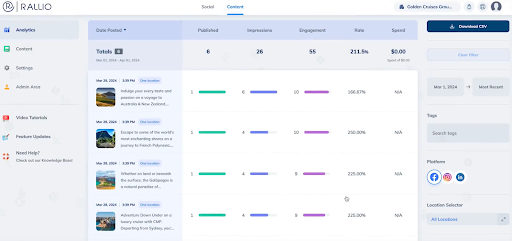
The metrics that matter for organic media are quite different from those you’d track for paid. Here are the key performance indicators (KPIs) to watch for each.
Organic Media KPIs
When evaluating the performance of your organic social media content, focus on:
- Engagement rate
- Shares and comments
- Follower growth
- Website traffic
- Community sentiment
Paid Media KPIs
For paid social media advertising, the metrics shift toward performance and return:
- Click-through rate (CTR)
- Cost per click (CPC)
- Cost per acquisition (CPA)
- Return on ad spend (ROAS)
- Conversion rate
Tracking both sets of metrics gives you a complete picture of how your overall social media strategy is performing, not just one piece of it.
How Rallio Helps Brands Manage Organic and Paid Media at Scale
Managing organic and paid social media across dozens or hundreds of locations is no small task. Between creating localized content, maintaining brand consistency, monitoring performance, and engaging with communities in real time, the operational lift can be overwhelming.
That’s where Rallio comes in.
Rallio is built specifically for multi-location brands and franchises, giving you the tools to manage both organic and paid media from a single, centralized platform. Between the centralized asset management, the social scheduling tools, and the AI-powered content assistance, it gives you everything you need to scale the perfect social media campaigns.
FAQs
1. What is the difference between organic and paid social media?
Organic social media refers to content you publish on social platforms without paying to promote it. Paid social media advertising involves paying to promote content or run ads on social platforms to reach a broader or more targeted audience.
2. Is organic social media still effective for businesses?
Absolutely. Organic social media remains one of the most powerful tools for building long-term brand trust and community engagement, and for improving AI search visibility and discoverability. The key is consistency. Brands that show up regularly with valuable, relevant content continue to see strong results from organic media.
3. When should businesses use paid social media?
Paid social media is most effective when you have a specific goal that requires speed and scale, like a launch, a limited-time offer, or a new location. It’s also a powerful tool for retargeting users who have already engaged with your brand but haven’t yet converted.
4. Should businesses use both organic and paid social media together?
Yes, and this is the approach we’d always recommend. Brands that invest in both and use each strategically will consistently outperform those that rely on one or the other alone.
Achieve Your Social Media Goals With Rallio
For franchise brands and multi-location businesses, Rallio takes the complexity out of social media management, so you can focus on strategy and growth rather than logistics.
Ready to see what’s possible? Book a demonstration today and let’s build a social media strategy that works for every location, every time.

Joe Kennedy is a Social Media Specialist at Rallio | Powered by Ignite Visibility with over seven years of experience helping brands and franchises build strong, engaged online communities.
With a degree in Sociology from the University of California, Santa Barbara, he brings a unique perspective to social media, connecting insights about human behavior to digital engagement strategies. Joe has worked extensively with franchises, developing social media publishing plans that balance brand consistency with local relevance, driving both engagement and measurable business results.
Passionate about the intersection of sociology and social media, he leverages data, trends, and audience insights to help clients create authentic connections and grow their presence across platforms.