
You know your business needs to be on social media, but how do you prove the value in your marketing budget? Likes and followers are only a small part of the story.
Understanding your social media ROI means connecting your social activity to real business outcomes, things like revenue, leads, and customer growth. With the tools available today, measuring that return is more accessible than ever.
Expert Opinion on Social Media ROI
Here’s the deal: When it comes to social media, ROI is not optional. This is the difference between running a strategy and running a guessing game. Businesses that track their return are better positioned to grow, adapt, and justify continued investment in their social programs. Without measuring your progress, even the most active social presence is difficult to defend or improve.
I also want to emphasize that social media ROI isn’t just about direct sales. A strong social strategy builds trust, drives awareness, and keeps a brand top of mind long before a customer ever clicks “buy.” The goal is to connect those softer, long-term benefits to measurable indicators that tell a clearer story about performance over time.
What Is Social Media ROI?
Social media ROI, or social media return on investment, is a measure of the value your business gains from its social media efforts relative to what you spend on them. That spend includes time, tools, advertising dollars, and any content creation costs. The return can be financial, but it doesn’t have to be limited to revenue alone.
ROI in social media includes both financial and non-financial value. Some outcomes are easy to tie to a dollar amount. Others are less direct but still meaningful to your business. Here are examples of outcomes social media can influence:
- Leads: prospects who find you through social and enter your sales funnel
- Sales: direct conversions driven by social content or ads
- Website traffic: visitors who click from social to your site
- Customer engagement: interactions that build loyalty and community
- Brand awareness: visibility and recognition among your target audience
- Reputation management: how your brand appears and responds online
Why Measuring Social Media Marketing ROI Matters
Don’t think about measuring your social media marketing ROI as a chore. Instead, reframe it to what it actually is: how smart businesses stay competitive and intentional with their resources. Here’s why it matters.
Justify Your Marketing Investment
When marketing budgets are scrutinized, social media is often the first line item questioned. Tracking ROI gives you concrete data to demonstrate the value of your social efforts. It moves the conversation from “we think it’s working” to “here’s the proof.”
Whether you’re presenting to stakeholders or simply reviewing your own spend, knowing your return keeps investment decisions grounded in reality rather than assumptions.
Identify What’s Working
Not every post, campaign, or platform performs equally. Measuring social media marketing ROI helps you identify which content types, formats, and channels are actually driving results. It removes guesswork from your content strategy.
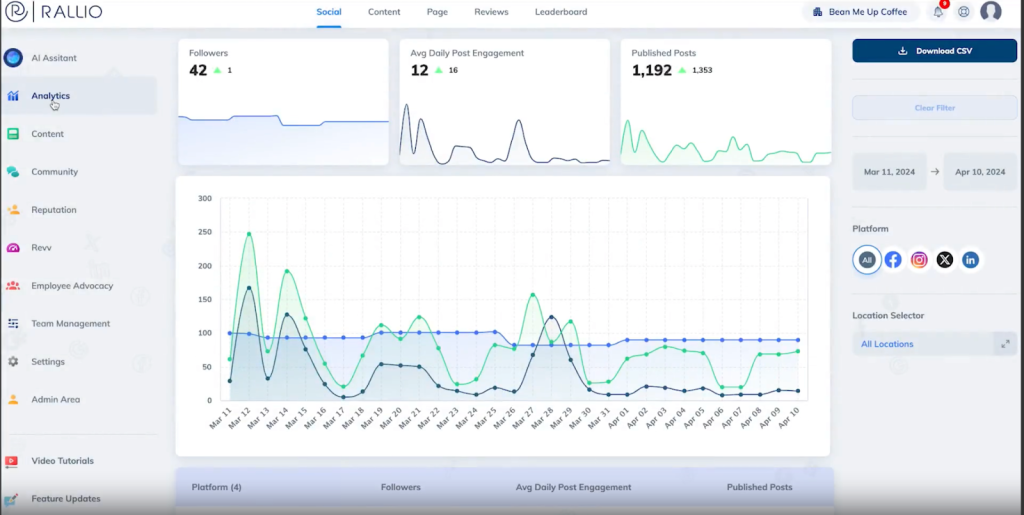
When you know what works, you can do more of it. When you know what doesn’t, you stop wasting resources on it. It really is that straightforward.
Make Better Business Decisions
Data-backed decisions are better decisions. ROI tracking gives you the insights to allocate your time, budget, and team resources more effectively. Instead of spreading effort evenly across every channel, you focus energy where it generates the most return.
Over time, this kind of intentional strategy compounds. Small optimizations add up to significant improvements in overall performance.
Align Social Media With Business Goals
Social media should not exist in a silo. Measuring ROI ensures your social activity is tied to broader company objectives, such as growing your customer base, entering a new market, or improving customer retention.
When social goals and business goals are aligned, your team operates with clearer direction. Every piece of content has a purpose. Every campaign has a benchmark. That’s how you find success.
Which Metrics Actually Matter?
Not all metrics carry equal weight. Before you can calculate social media ROI, you need to track the right metrics. The ones that matter most depend on your goals.
Awareness Metrics
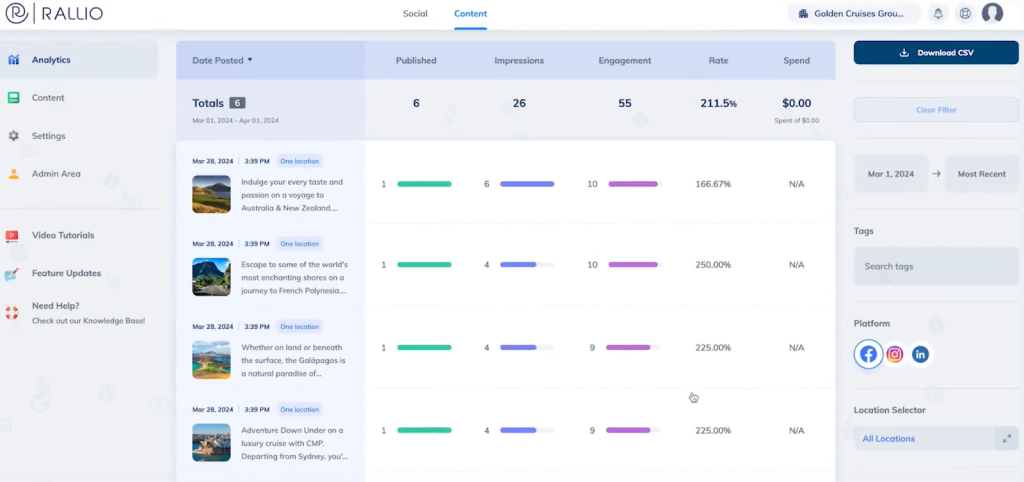
These measure how many people are seeing your content and whether your audience is growing. It includes things like:
- Reach: the number of unique accounts that saw your content
- Impressions: total number of times your content was displayed
- Follower growth: how your audience size changes over time
Engagement Metrics
Engagement shows how your audience is responding to what you post. Key Performance Indicators (KPIs), including likes, comments, and shares, combine to determine your engagement rate.
Traffic Metrics
Traffic metrics connect social activity to what’s happening on your website. This includes KPIs like the number of website visits from social channels and link clicks from posts, bios, and ads.
Conversion Metrics
Conversion metrics are where social media ROI gets tangible. These directly tie social to business outcomes.
- Leads generated
- Form submissions
- Purchases
- Appointments booked
Reputation Metrics
For many businesses, especially multi-location brands, reputation is a major component of social media return on investment.
- Reviews: volume and average rating
- Customer sentiment: how people talk about your brand
- Response rates: how quickly and consistently you engage with reviews and messages
How to Measure Social Media ROI in 4 Steps
Knowing you should measure social media advertising ROI and actually doing it are two different things, especially when you’re running social for multiple locations or with a small team. Here’s how to measure marketing ROI:
1. Set Clear Goals
You can’t measure what you haven’t defined. Start by identifying what you want social media to accomplish. Common goals include:
- Increasing brand awareness
- Generating leads
- Driving website traffic
- Improving customer engagement
Each goal should have a specific, measurable target attached to it. Vague goals produce vague results.
2. Track the Right KPIs
Once your goals are set, match your KPIs to them. If your goal is lead generation, your KPIs should include form submissions and landing page visits, not just likes and comments.
Vanity metrics feel good, but don’t move business forward. Focus on the numbers that connect to outcomes your business actually cares about.
3. Use Tracking Tools
You don’t need to measure ROI manually. A range of tools makes social media ROI tracking straightforward:
- Analytics platforms built into each social network (Meta Business Suite, LinkedIn Analytics, etc.)
- UTM links, the custom URLs that let you track where your website traffic is coming from
- Website analytics tools, like Google Analytics, to see the full picture of social-driven behavior
- Analytics within your posting platform
Using these tools together gives you a more complete and accurate view of performance.
4. Calculate ROI
Once you have your revenue and cost data, use this social media ROI calculator to find your ROI:
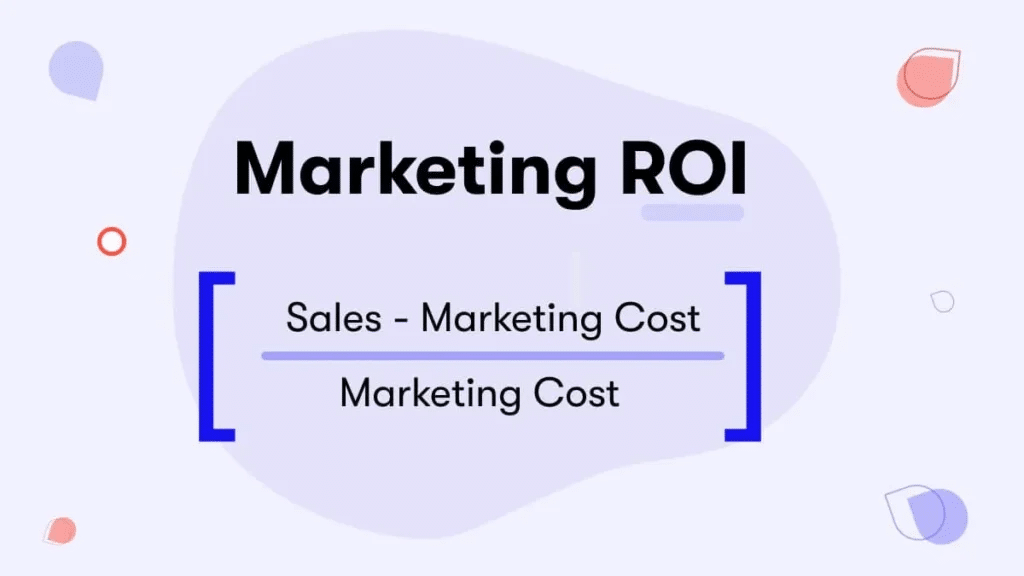
Social Media ROI (%) = [(Revenue Generated – Investment Cost) ÷ Investment Cost] × 100
For example, if you generated $5,000 in revenue from a campaign that cost $1,000 to run, your ROI would be 400%.
Keep in mind that “revenue” can also represent the estimated value of non-sales outcomes, like the cost of acquiring a lead through other channels, to account for less direct conversions.
Common Challenges When Measuring Social Media ROI
Even with the right tools and intentions, measuring social media ROI comes with real obstacles. It helps to know them going in. For example:
- Attribution isn’t always simple. Customers often interact with multiple channels before converting. Someone might see your Instagram post, Google your brand, and then convert through an email. Social media may have started that journey, but it won’t always get the credit.
- Brand awareness is harder to quantify. Not every benefit of social media shows up as immediate revenue. Building recognition and trust takes time, and those gains don’t always translate cleanly into a dollar figure.
- Inconsistent reporting across platforms. Each social network tracks data differently. When your reporting is spread across multiple dashboards, it creates blind spots and makes it harder to see the full story.
How Rallio Helps Businesses Maximize Social Media ROI
You can’t just post and pray. Getting the most from social media requires the right systems. Rallio is built to help businesses, especially multi-location brands, manage, measure, and improve their social media return on investment from a single platform.
Here’s what Rallio brings to the table:
- Centralized social management that allows you to manage all your locations and accounts from one place
- AI-powered content creation to generate on-brand content faster without sacrificing quality
- Scheduling and automation to stay consistent without the manual effort
- Reputation management and review responses to monitor and respond to reviews across locations
- Analytics and reporting to track performance data that actually maps to business outcomes
- Location-level insights for multi-location brands to see what’s working at each location
When everything lives in one platform, measuring social media ROI becomes less of a burden and more of a built-in advantage.
FAQs
1. What is social media ROI?
Social media ROI measures the return your business gets from its social media efforts relative to what you invest in them. That investment includes time, content, tools, and ad spend. The return includes both financial outcomes, such as sales and leads, and non-financial outcomes, such as brand awareness and customer engagement.
2. Can you measure the ROI of your social media marketing?
Yes! You just need some data and a social media ROI calculator.
3. How do you calculate social media ROI?
Here’s a social media ROI calculator: [(Revenue Generated – Investment Cost) ÷ Investment Cost] × 100. For example, if a campaign generated $3,000 and cost $500, your ROI is 500%. You can also use an estimated value for non-revenue outcomes to get a fuller picture.
4. What metrics should I track to measure social media ROI?
Which metrics you track depends on your goals. For awareness, track reach, impressions, and follower growth. For engagement, monitor likes, comments, shares, and engagement rate. For business outcomes, focus on conversions, including leads, form submissions, purchases, and appointments booked. Traffic metrics and reputation metrics round out the full picture.
5. How long does it take to see ROI from social media?
It varies. Paid social advertising can show results in days or weeks. Organic social media typically takes three to six months before the returns become clearly measurable. Consistency and clear goal-setting speed up the process.
Get the Most Out of Your Social Media with Rallio
Social media ROI is measurable. You just need the right goals, the right metrics, and the right tools to connect the dots.
Rallio gives businesses everything they need to manage social media with purpose and track the results that matter. Explore what Rallio can do for your business.

Phoebe Hudson is a Senior Account Strategist at Rallio, Powered by Ignite Visibility. With over five years of experience in SaaS and social media marketing, she partners closely with brands to simplify social media, streamline their strategy, and build meaningful connections with their audiences. Phoebe is passionate about making social media marketing feel approachable, purposeful, and aligned with what matters most to each business. She specializes in onboarding and platform adoption, guiding teams with clear processes and ongoing support.