
Your employees are already talking about work online. Employee advocacy helps them share those thoughts and experiences in ways that build trust in your brand. That’s the kind of brand awareness your company can’t build on its own.
In this blog, Tyler Phillips, Creative Marketing Manager, will explain how to build a voluntary program, support the team members who join it, and measure its contribution to your business. Whether you run a single team, a franchise, or a multi-location brand, you’ll find practical steps you can take to encourage employee advocacy for your brand.
What You’ll Learn:
- What is Employee Advocacy?
- What Are the Benefits of Employee Advocacy for Businesses?
- What Do Employees Gain from Participating?
- Employee Advocacy Examples and Ideas
- How to Build an Employee Advocacy Program
- How Employee Advocacy Works Across Franchise Locations
- How to Measure Employee Advocacy Results
- When Do You Need Employee Advocacy Software?
- How Rallio Supports Employee Advocacy
- FAQs
What is Employee Advocacy?
Employee advocacy is when employees support or promote their employer through their own personal networks. It can happen in many places, including conversations at industry events or referrals to friends and former colleagues. For this blog, we’ll focus on employee advocacy through social media, where the effect is easiest to see and measure.
On social media, employee advocacy can include:
- Sharing company updates
- Explaining the work they do
- Offering relevant professional insights
- Sharing details of your company’s culture
Whether it’s a project manager posting a lesson they recently learned or a location team member sharing photos from a recent community event, each post comes from a real person with a real connection to your brand. These posts often feel more personal than a company page post.
It helps to separate a structured program from employees posting on their own. Even if your team already mentions your company online, a structured employee advocacy program gives you guidance you can oversee. It typically includes clear brand guidelines, content employees can draw inspiration from, support for those who want it, and ways to measure results.
Even with this structured program, participation stays voluntary. Employees choose whether to join, what to share, and how to say it in their own voice. Your program just helps them tell the story.
Employee Advocacy vs. Employee-Generated Content vs. UGC
These three terms are often used interchangeably, but each one describes something different. To understand the importance of employee advocacy, you have to understand the difference between:
- Employee advocacy is when employees share or support the business.
- Employee-generated content describes who creates the content – the employee.
- User-generated content (UGC) means content from customers and community members outside your organization.
The categories can overlap, so it helps to look at who created the content and where it’s shared. An employee-created video published on a brand account is EGC, but because it isn’t posted on their personal account, it isn’t employee advocacy. When an employee posts their own video or insights on their personal profile, you get both EGC and employee advocacy.
Expert Opinion on Employee Advocacy
Social media is noisy. If you want to get attention, you need to stand out. That’s where employee advocacy comes into play.
According to industry research, employee-shared content receives 8x more engagement than content from brand channels. And it makes sense. People trust people, not logos. When your team shares authentic stories about their work, customers listen.
Smart brands are catching on fast. They’re investing in employee advocacy tools and programs that amplify reach and build trust. The result? More visibility, stronger credibility, and better business outcomes.
Before you start turning your employees into brand advocates, let’s talk a little more about what employee advocacy is and how you can use it to grow your business in 2026.
What Are The Benefits of Employee Advocacy for Businesses?
So, why is employee advocacy important for businesses? Let’s take a look at what businesses get out of these programs.
The most important part of employee advocacy comes down to who is doing the talking. Your employees know your products, services, customers, and work inside and out. They have a perspective other people don’t.
A well-run program can support your business by:
- Build trust and authenticity: When team members share their experiences, it gives the content the authenticity it needs to cut through the noise of oversaturated social feeds.
- Expand organic reach: Every employee has their own network of connections. When they share company content, your message reaches new audiences. This multiplies your brand’s visibility without paid advertising.
- Support recruitment and employer brand: Job seekers research company culture before applying. What better way to showcase your culture than with actual employee posts? It also helps attract higher-quality candidates who align with your values and strengthens your reputation as an employer.
- Be a cost-efficient growth channel: Since you’ll be leveraging resources you already have, building an employee advocacy program costs less than traditional advertising. While you’ll need employee advocacy software to streamline the process and track results, the return on investment often exceeds other marketing channels.
- Improve brand storytelling and narrative control: Your employees help shape how people see your brand. When they share positive experiences, they add informed perspectives beyond your company page. Having trusted and credible brand advocates becomes especially valuable during launches or challenging times.
What Do Employees Gain from Participating?
A good program works for the people who join it as well. Some possible benefits include:
- Professional visibility and thought leadership: Sharing industry insights can help employees show what they know. Over time, this may grow their professional reputation and make their expertise easier for colleagues and customers to find.
- Communication skills: Writing posts, explaining their work in plain language, and responding to comments give employees regular practice at communicating with an audience. Those skills carry over to other areas of their job, such as client conversations and team collaborations.
- Networking: Posts can start conversations with peers, prospects, and other professionals in the same field. Some employees may build useful connections they wouldn’t have made otherwise.
- Recognition: When company leaders or customers notice an employee’s post, it can be a visible way to acknowledge their expertise and the work they do. Cross-team sharing can also help employees learn what their colleagues in other departments are working on.
How you run a program shapes whether employees see these benefits. Providing practical support is a core part of employee advocacy best practices. It also makes participation feel worthwhile instead of like extra work.
When developing your program, consider the following:
- Training: Show employees how to write posts, what’s safe to share, and how to use each platform with confidence.
- Reasonable time to contribute: Let employees post during work hours or set aside a few minutes each week, so participation doesn’t become unpaid overtime.
- Choice of topics: Offer prompts and ideas, but let employees pick the subjects, voice, and tone that feel natural to them.
- Alternatives to personal accounts: Some people prefer to keep their personal profiles private, and that’s okay. Give them other ways to contribute, such as writing a quote for a company post, helping with an internal story, or brainstorming ideas with the marketing team.
As your program is rolling out, it’s important to ask people how it’s going. Posting volume shows how much activity there is, but it doesn’t show whether employees feel supported or engaged. Short surveys and informal check-ins will show you what’s working and what to adjust.
Employee Advocacy Examples and Content Ideas
Employee advocacy is easier to understand when you see it in action. Below, you’ll find a few illustrative scenarios to use as inspiration. Keep in mind that these are not proven results, so test what works with your own audience.
Employee-generated content (EGC) can include:
- Posts
- Photos
- Videos
- Blog posts
- Stories
- Testimonials
It counts as advocacy when employees share it through their own networks. Most programs work best when employees combine sharing branded company content and creating their own original posts.
Expert Advice
An employee explains something they know well, such as a common customer mistake and how to avoid it.
- Employee’s contribution: Their knowledge and their own voice
- Audience and channel: Customers, prospects, and peers, usually on LinkedIn or through short-form video
- Adapt it: Ask subject-matter experts to answer one customer question a month, using a simple outline of the problem, the advice, and one takeaway.
A Project Lesson
An employee shares what they learned from a recent project, launch, or engagement with a client.
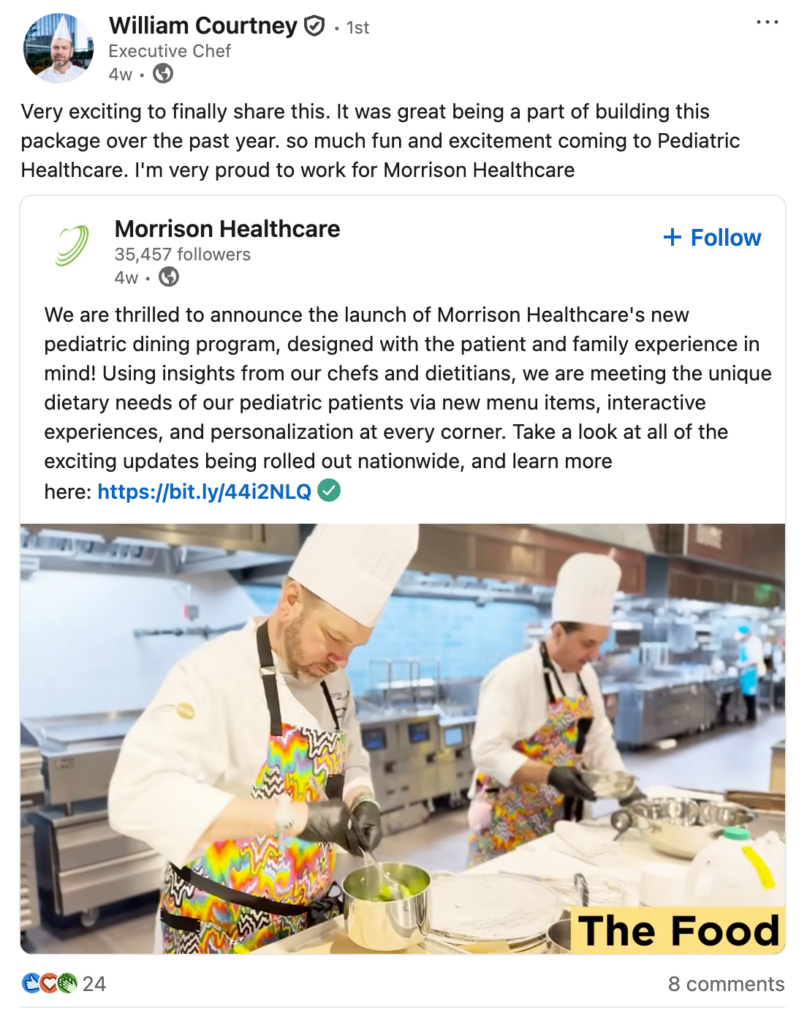
- Employee’s contribution: Firsthand details on what worked, what they’d change, and what others can learn from it
- Audience and channel: Professionals facing similar challenges, on LinkedIn as a text post or short carousel.
- Adapt it: Add a “lessons learned” prompt to each major project, then let the project lead choose one insight to share after a quick confidentiality check.
A Team Milestone
An employee shares an anniversary, certification, product launch, or team achievement.
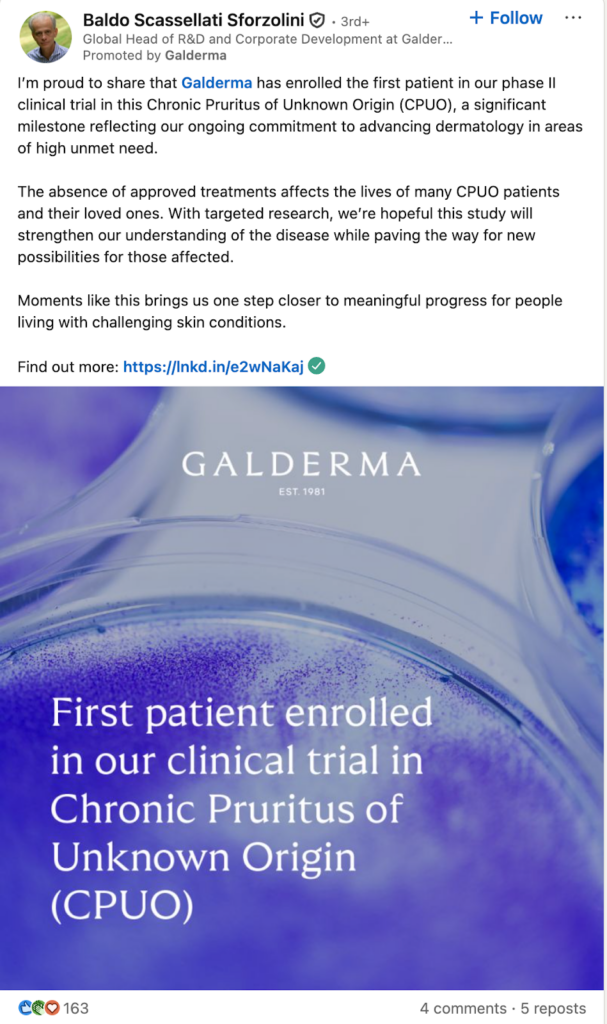
- Employee’s contribution: The personal story behind the milestone and a thank-you to the people who helped.
- Audience and channel: Colleagues, customers, and people curious about your culture, through photos or short videos on LinkedIn and Instagram
- Adapt it: Offer a short post template with space to name the milestone, say thanks, and mention what’s next.
Recruitment
A current employee describes their role, a typical week, or what they enjoy about working at your company.
- Employee’s contribution: Honest, firsthand detail that a job listing can’t provide
- Audience and channel: Potential candidates on LinkedIn, Instagram, or TikTok
- Adapt it: Have the hiring manager share the open role and invite team members to add their own perspective in separate posts.
Community Involvement
Employees take part in local events, volunteer days, or sponsorships and share the experience.
- Employee’s contribution: Photos, a short story, and a personal reason for being involved
- Audience and channel: Local customers and community partners on Facebook, Instagram, or LinkedIn
- Adapt it: Franchise and multi-location teams can let each location submit photos and a short note, then add a suggested caption that employees personalize.
How to Build an Employee Advocacy Program
A strong program starts with a clear plan. Here are the employee advocacy best practices to help you plan your launch.
Step 1: Choose a Business Goal and Program Owner
Start with one initial goal rather than trying to do everything at once. Then decide who will run the program and what leadership they’ll provide.
- Pick a goal: Qualified inquiries, recruiting applicants, or awareness within a defined market
- Assign an owner: One person needs to be accountable for the program.
- Agree on the basics: Budget, participating teams, reporting period, and success criteria.
Leadership support still matters here. Leaders need to back the staff time, approve a budget, review the program’s capacity needs, and decide on policy and priorities.
Step 2: Recruit Volunteers and Understand Their Needs
Being with willing participants across the roles and locations that fit your goal. Ask what they would feel comfortable sharing and what support they need.
Make it easy for them to participate by offering options, contributing ideas, or helping them publish. If a participant ever wants to step back, let them.
Although this is a voluntary program, it should still be paid. Confirm work-time and compensation agreements. Don’t assume participation is an unpaid, off-hours activity.
Step 3: Create a Clear Employee Advocacy Policy
A clear policy protects both your employees and your business. It should be short enough that people will actually read it, but long enough to cover all your bases.
Make sure to cover topics like confidential information, customer permissions, approved claims, content ownership and reuse, account access, escalation contacts, and offboarding. Double-check it against the National Labor Relations Board and Federal Trade Commission requirements and guidelines before publishing your policy.
Explain how the program activity will be measured and who can see it, so there are no surprises in the future. Always respect employees’ personal accounts, and have a human review of higher-risk content.
Step 4: Build a Content Library and Train Participants
Make it easy for employees to post something accurate and useful. A shared library and a little training do most of the work.
Be sure to stock the library with approved source material, optional caption starters, images with reuse permissions, and disclosure examples. Feel free to mix content types and include company updates or other useful industry information.
Even though you’re providing them with social media post ideas and brand guidelines, you should also show them how to add their voice and authentic take to your examples.
Always give your participants the name and contact information of who to go to with questions or concerns about the projects.
Step 5: Make Recognition Useful and Participation Sustainable
Recognition and rewards are an important part of your program. Focus on what actually helps your employees feel their effort is valued, not just what you think will.
- Recognize what matters: Helpful contributions, learning, and consistency, not just the biggest follower counts.
- Ask first: Get permission before publicly featuring an employee.
- Protect honesty: Don’t reward exaggerated claims or pressure anyone to publish something they don’t believe in.
- Be transparent: Explain incentives whenever necessary.
Step 6: Encourage Genuine Participation, Not Artificial Engagement
Real conversations beat inflated numbers. Skip things like engagement pods and automated comments, which might not even be allowed on certain platforms.
Don’t force people to like, comment, or share your posts. Instead, let your engagement be earned. Invite comments from people who have something real to say.
Step 7: Run a Small Pilot Before Expanding
Test your process with a small group before you scale. This four-week plan is a simple employee advocacy program example you can adapt to fit your needs. Keep in mind, this is a planning example, not a guaranteed timeline for results.
- Week 1: Recruit and train volunteers.
- Week 2: Supply content options and review drafts.
- Week 3: Gather feedback and resolve obstacles.
- Week 4: Assess participation, content quality, and early audience response.
Grow your program only when it feels manageable. Once your pilot runs smoothly, the next question is which employee advocacy tools can support it as it grows.
How Employee Advocacy Works Across Franchise Locations
Franchise and multi-location brands can benefit from employee advocacy, too, as long as the roles are clear. A simple corporate-to-local workflow could look something like this:
- Corporate supplies the foundation: Approved claims, brand assets, and policy.
- Local managers add relevant details: Events, offers, hours, and community news for their location.
- Willing team members add firsthand perspectives: Their own experience in their own words.
- Designated reviewers check higher-risk posts: Anything involving regulated claims, customer information, or sensitive topics.
Local variation is what makes this approach useful. Each location can offer something different, whether it’s a local event, varying staff expertise, or special community projects.
How to Measure Employee Advocacy Results
You can measure your results in three different ways:
- Participation: How many of your enrolled volunteers are active participants?
- Audience response: How is your audience responding to the posts? Are you getting relevant engagement from your target audience?
- Business outcomes: Track your visits, qualified inquiries, and applications and apply them to your goal.
Use campaign links to track visits, and connect them to your CRM or recruitment data where available. Platform access can sometimes limit what you can see, so be sure to write down any gaps in your reporting.
Be careful with follower counts. Adding up participants’ followers will give you a potential audience estimate, not your actual reach. This is because some people will overlap and some of those followers won’t even see the post.
Calculate Claims Before Claiming ROI
Instead of assuming a strong return, build a simple framework and let your numbers decide. Start by figuring out the full cost of the program. Include things like software, staff time, training support, production needs, and the cost of any incentives, rewards, or recognition you’ll give your participants.
Once you have an idea of your profit, compare it with the total program cost. Treat attributed revenue, estimated media value, and engagement as separate measures rather than one combined number.
Use AI for Drafting Without Inventing Employee Experiences
AI can’t replace your participant’s insights, but it can help them get started. Tools like Ralio’s AI creation tools can support drafting, but your employees should always confirm the experience, facts, and final wording. Never generate fictional first-person testimonials and don’t upload confidential information to tools your company hasn’t approved.
When Do You Need Employee Advocacy Software?
You don’t need specialized software to start. You can run a small pilot with a shared content library and a clear approval process.
However, as your program grows, the right employee advocacy software can help keep it running smoothly. You should start looking for it when you have:
- So many participants that manual sharing and tracking have gotten harder to manage
- Multiple locations that each need local content
- A need for permission management with different levels of access
- A simpler way for employees to find approved posts
- A need for clearer reporting and data on participation and performance.
When comparing the best employee advocacy platforms, ask practical questions. Some questions you should consider, especially when looking at employee advocacy platform features for global marketing teams, include:
- Which networks can employees connect to, and how?
- Can employees post directly, schedule, or only copy content?
- What metrics do you see in regard to participation, engagement, and visits?
- Can you control access by team, region, or location?
- How are access and connected accounts removed when someone leaves?
How Rallio Supports Employee Advocacy
Rallio’s employee advocacy platform helps your team share brand-approved content on their personal channels. Its features include:
- Brand-approved content
- Program tracking
- Customizable rewards
- Participation and engagement leaderboard
- And more!
These tools can streamline and support you, but they don’t replace the policy, training, and review processes you’ll need to run a successful program. Ready to see how it works for your team? Schedule a free demonstration.
FAQs
1. What is employee advocacy, and how does EGC fit into it?
Employee advocacy is when team members promote your company on their personal social channels. Employee-generated content (EGC) is the original content employees create about their work experiences. Together, they amplify your brand’s reach and credibility by turning your employees into trusted voices and brand advocates.
2. Why should our company invest in employee advocacy?
Depending on your company’s goals, employee advocacy could be a cost-efficient marketing strategy to help you grow. Employees become brand advocates who share authentic stories and information about your business.
3. What kind of content should employees share?
Authenticity matters more than polish. Focus on real experiences that showcase your brand values, such as employee success stories, behind-the-scenes moments, and culture highlights. Industry insights and thought leadership work well too. You can also mix company-provided content with personal perspectives.
4. How do we encourage employees to participate?
To encourage participation, make it easy for employees to get involved. Create content libraries, templates, clear guidelines, and regular prompts to get their creative juices flowing. Always celebrate and reward participation, and remove barriers and friction wherever possible.
5. What risks or challenges should we be aware of?
Key risks include brand inconsistency, legal compliance issues, and quality control. Confidential information could accidentally be shared. Participation may drop off after initial enthusiasm. Some content might miss brand standards. Address these challenges through clear guidelines, proper training, and employee advocacy software that streamlines oversight and simplifies participation.
6. Is participation in an employee advocacy program voluntary?
Yes. Employees should choose whether to join, what to share, and how to say it. You can offer assistance, ideas, and approved brand content, but don’t take away their voice. Always make program withdrawal easy, and don’t penalize anyone for opting out.
7. Do employees need to disclose where they work?
Yes. When employees endorse your products or services, they must disclose the relationship. For example, they can say something like “I work for XYZ company, and …” Always check your disclosure requirements against FTC guidelines.
8. Can employees contribute without posting on their personal accounts?
Yes. Employees can suggest ideas, give a quote for a company post, appear in approved brand content, or help with an internal story. These contributions are employee-generated content, though, not advocacy.
9. Do we need employee advocacy software to get started?
No. You can run a small pilot with a shared content library and a clear approval process. As your program grows, employee advocacy software will help you manage permissions, approvals, content distribution, and reporting.
10. How do you measure employee advocacy results?
You should track three layers separately: participation (how many active participants do you have in the program), audience response (relevant engagement), and business outcomes (tracked visits and/or qualified inquiries). Use campaign links and CRM or recruitment data where available, and don’t treat follower counts as actual reach.
11. How can franchises manage local participation?
Corporate offices can provide approved claims, assets, and brand guidelines. Local managers then add relevant details, and willing team members share firsthand perspectives. Always confirm which organizations employ each participant and who administers each location’s program. Remember, not every franchisee is an employee, so don’t treat them as employees by default.
Showcase Your Employee Team with Rallio
Employee advocacy works best when you start small and build from what you learn. You don’t need a large launch or a big budget to begin. Just choose a manageable goal, invite employees who want to take part, and test a content workflow your team can keep up with.
Once that workflow runs smoothly, consider adding participants and locations at a pace that works for your team. Franchise and multi-location brands can follow these exact same steps.
Ready to coordinate employee content across your locations? See how Rallio brings approved posts, participation tracking, and rewards into one easy-to-use program. Request a demo today!

Tyler Phillips is a Creative Marketing Manager at Rallio | Powered by Ignite Visibility, with over seven years of experience in SaaS and social media marketing and more than sixteen years in online video production. Known for his creative thinking and innovative problem-solving, Tyler specializes in designing and executing strategic digital advertising and content marketing campaigns. His passion lies in bridging creativity and data—turning complex ideas into simple, impactful brand narratives that connect, engage, and inspire.