
Are you paying attention to what your competition is doing on social media? If you’re not, you should be.
For franchise owners and multi-location brands, this is even more important. You are not just competing at the national level. You are competing block by block, neighborhood by neighborhood. Knowing what is working for your competitors helps you show up stronger at every level.
In this blog, Olivia Reck, Account Manager, will explain everything you need to know about social media competitor analysis: what it is, why it matters, how to do it, and how the right tools make it easier than ever.
What You’ll Learn:
- What Is a Social Media Competitive Analysis?
- Why Competitive Analysis Matters for Multi-Location Brands
- How to Conduct a Social Media Competitor Analysis
- Common Competitive Analysis Mistakes to Avoid
- Tools That Help With Social Media Competitor Analysis
- How Rallio Helps Brands Stay Ahead of Competitors
- FAQ
Expert Opinion on Social Media Competitor Analysis
Social media competitor analysis is now a core part of any smart marketing strategy. Brands that consistently monitor their competitors gain faster insights into what audiences actually want, and they use that to stay one step ahead. The brands that skip this step are essentially flying blind.
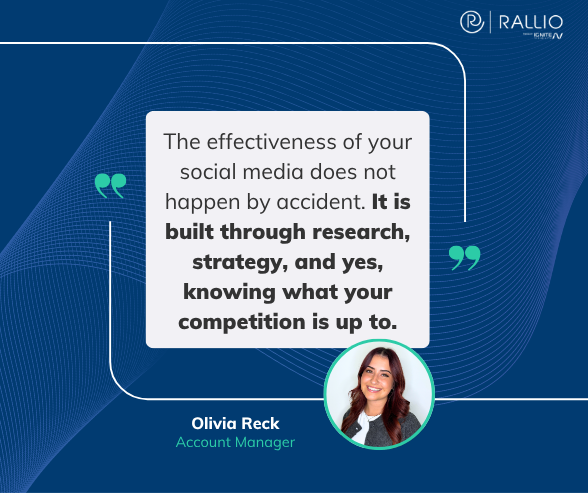
After all, the effectiveness of your social media does not happen by accident. It is built through research, strategy, and yes, knowing what your competition is up to.
By analyzing your competition, you can learn which platforms are working best, what kind of content your shared audience enjoys, and ways to get your customers more engaged with your business – and maybe even less engaged with your competitor!
What Is a Social Media Competitive Analysis?
A social media competitive analysis is the process of researching and evaluating your competitors’ social media presence to better understand what is working in your industry. It means looking at what they post, how often they post, how their audience responds, and where they show up.
Keep in mind that there is a big difference between tracking competitors and copying them. Tracking helps you spot trends, find gaps, and sharpen your own strategy. Copying just makes you a less original version of someone else. The goal is not to become your competitor, but to learn from them instead.
Here is what a strong competitive analysis can reveal about your competitors’ social strategies:
- Content performance: What types of posts get the most likes, shares, and saves
- Engagement trends: When their audience is most active and responsive
- Posting frequency: How often they show up and whether consistency pays off for them
- Audience sentiment: How people feel about their brand based on comments and reviews
- Share of voice: How much of the online conversation they own compared to you
- Platform strategy: Which platforms they invest in and which they ignore
Why Competitive Analysis Matters for Multi-Location Brands
For a single-location business, competitor tracking is valuable, but for a franchise or multi-location brand, it is essential. A social media competitive analysis helps you understand the regional and local trends that shape each market you operate in.
This kind of analysis also helps you find the gaps your competitors are missing. Those gaps are your opportunities. Knowing where they fall short helps you show up in ways they are not.
Beyond finding gaps, competitive analysis improves your localized content strategies. When you know what resonates with audiences in specific markets, you can create content that feels really natural and local.
And when you benchmark your franchise or location performance against competitors in the same area, you get a clear, honest picture of where you are winning and where you have room to grow. In crowded local markets, that could be the difference between blending in and standing out.
How to Conduct a Social Media Competitor Analysis
Now that you know why you should take part in competition tracking, let’s talk about how to analyze competitors on social media.
Identify Your Top Competitors
Start by knowing who you are up against. Typically, your top competitors fall into four groups:
- Direct competitors: Brands in your category targeting the same customers
- Local competitors: Businesses competing for attention in each of your specific markets
- Industry leaders and aspirational brands: Brands setting the standard, even if they are not a direct threat yet
- Competitors appearing in AI search and social discovery: In 2026, AI-powered search tools are changing how people find brands. You need to know who is showing up and how they’re doing it.
Analyze Their Social Presence
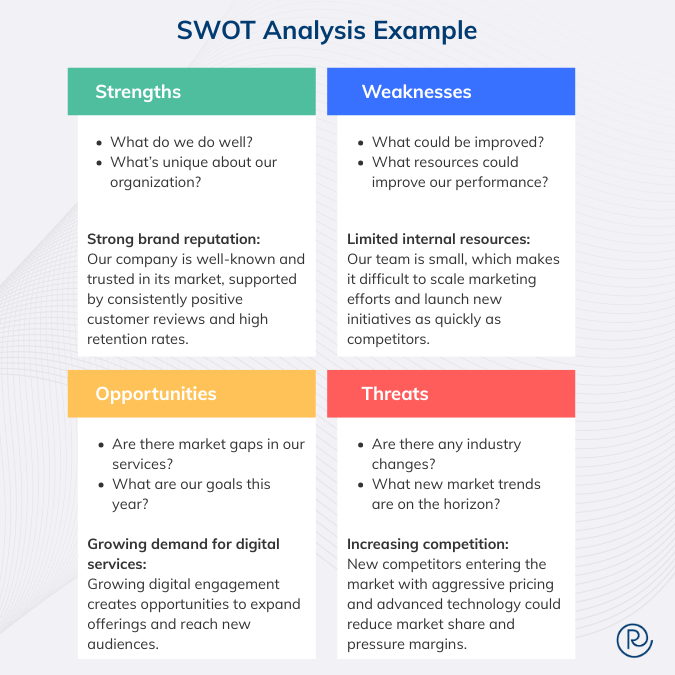
Once you know who your competitors are, look at how they show up in the same way that you would perform a SWOT analysis on your own content.
Notice what platforms they’re prioritizing and how consistently they’re posting. Look at their brand guidelines and take note of their branding, messaging, visual style, and creative approach.
Every choice tells you something about their strategy and their audience.
Track Key Metrics
This is where competitive analysis gets actionable. You want to look at KPIs that actually mean something, including:
- Engagement rate: Likes, comments, and shares relative to their audience size
- Audience growth: How quickly is their audience growing?
- Reach and impressions: How many people are actually seeing their content?
- Video performance: Are their videos getting views and watch time?
- Review and reputation trends: What are people saying about them publicly?
- Share of voice: How much do they should up in online conversations?
Review Their Top-Performing Content
Look at what is actually landing with their audience. Some brands get the most engagement on promotional posts, while others take a more community-focused approach.
Some brands love to ride out short-form video trends, while others lean into more localized content, such as shout-outs to local events, team members, or stories.
These patterns will give you valuable insights into what kind of content your audience likes.
Evaluate Community Engagement
Finally, look at how they interact with their community. How customers engage with the brand in their comments can tell you a lot about their connection to the brand.
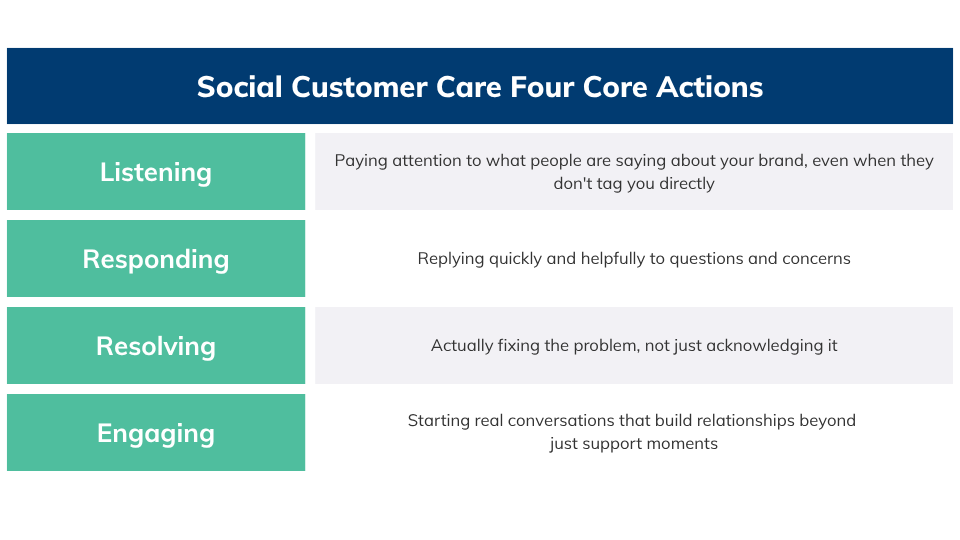
You can also learn a lot from reading the brand’s replies to consumer comments and reviews.
Brands that engage well tend to build stronger loyalty, and studying their tactics gives you a blueprint for doing it better.
Common Competitive Analysis Mistakes to Avoid
Even brands with good intentions can fall into traps when it comes to competition tracking. Here are the biggest mistakes to steer clear of:
- Focusing only on follower counts. Follower count tells you almost nothing about real performance. A brand can have a ton of followers and still get next to no engagement. A small, engaged audience is better than a large, disconnected one.
- Ignoring local competitors. Don’t skip over smaller or less well-known competitors. Those local mom-and-pop shops could be your biggest competitors.
- Tracking too many competitors at once. Pick three to five key competitors per market and track them well rather than spreading your attention too thin.
- Looking at vanity metrics instead of actionable insights. Focus on metrics that tie back to engagement, sentiment, and growth, not impressions or follower numbers.
- Failing to turn insights into strategy updates. This is the biggest one. Competitive analysis only has value if you act on it. Make sure you review your findings and update your content strategy accordingly.
Tools That Help With Social Media Competitor Analysis
Performing competitive analysis for social media doesn’t need to be done manually. There are several competitor analysis tools for social media designed to streamline this task.
They often include analytics dashboards that track performance across platforms, competitor benchmarking tools that let you compare your metrics side by side with competitors, and AI-powered reporting tools that surface insights automatically so you don’t have to dig through data yourself.
For multi-location brands specifically, centralized dashboards are a game-changer. When you have dozens, or even hundreds, of locations, you need a single view that shows you how each location stacks up against local competitors without logging into ten different tools.
The right platform brings all of that together in one place, saving your team time and making it easier to make confident, informed decisions at both the brand and local levels.
How Rallio Helps Brands Stay Ahead of Competitors
Rallio is built for exactly this kind of work. Here are just some of the ways it can help you perform a competitive analysis for social media and use the results to increase your visibility:
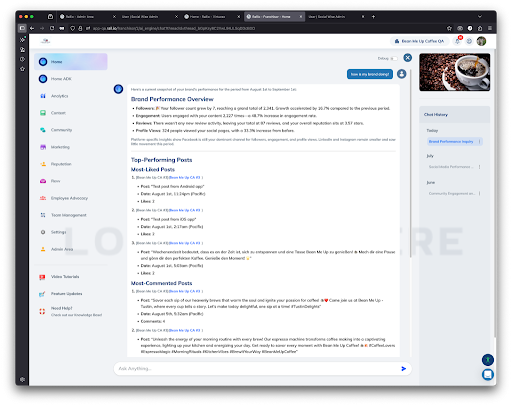
- AI-powered competitive analysis. Rallio uses AI to automatically surface competitive insights, so your team spends less time pulling reports and more time acting on them.
- Centralized analytics across every location. See how every location is performing and how it compares to competitors in that market from one unified dashboard.
- Social performance tracking and benchmarking. Track engagement rate, reach, audience growth, and more across your entire brand and benchmark those numbers against the competition.
- AI-powered insights and recommendations. Rallio gives you recommendations based on what is actually driving results.
- Localized content management at scale. Rallio makes it easy to localize your content so every market feels seen.
- Reputation monitoring and review management. Stay on top of what customers are saying about your brand and your competitors. Respond faster, improve engagement, and protect your reputation across every location.
Knowing what works in which market is the key to finding success, and Rallio makes it easier than ever!
FAQs About Social Media Competitor Analysis
1. What is a social media competitive analysis?
A social media competitive analysis involves researching your competitors’ social media presence to understand their strategies, performance, and audience engagement. It helps brands learn from competitors and sharpen their social media approach.
2. Why is social media competitive analysis important?
It gives you a real-world picture of what is working in your industry. For multi-location brands, it also reveals local trends and gaps that can help each location perform better in its specific market.
3. What metrics should I track during a competitive analysis?
Focus on engagement rate, audience growth, reach and impressions, video performance, share of voice, and review sentiment. These metrics give you actionable insight rather than just surface-level numbers.
4. How often should businesses perform a competitive analysis?
At a minimum, you should do it once a quarter. For brands in fast-moving or highly competitive industries, monthly check-ins are even better.
5. What tools can help with social media competitive analysis?
When it comes to competitor analysis tools for social media, you have a number of options. For multi-location brands, a centralized platform like Rallio is especially useful because it gives you brand-level and location-level visibility in one place.
Make the Most of Your Social Media with Rallio
Social media competitive analysis gives you the clarity to make smarter content decisions, find opportunities your competitors are missing, and show up stronger in every market you serve.
Rallio makes that process simple, scalable, and actually useful for franchise owners and multi-location brand managers. Whether you want AI-powered insights or centralized location analysis, Rallio has everything you need to stay one step ahead.
Ready to see what is possible? Get started with Rallio today.

Olivia Reck is an Account Manager at Rallio | Powered by Ignite Visibility, where she supports the support team, account managers, and leadership to ensure clients receive top-tier service and results. Since joining Rallio in 2022, Olivia has developed a strong understanding of the company’s mission and a passion for helping brands grow. She holds a degree in Communications from California State University, Long Beach. She loves collaborating with others, learning new things about marketing and technology, and finding innovative ways to drive engagement and success.