
Facebook is not just a place for birthday reminders and neighborhood groups. With over three billion monthly active users, it remains one of the most powerful platforms a business can use to grow.
However, Facebook business pages are no longer enough to get your word out. If you want your business to win on Facebook now, you have to combine organic content, genuine community engagement, and smart paid strategy.
For small businesses, that combination can be a serious competitive advantage. In this blog, Curren Jardim, Account Specialist, will give you a business Facebook overview and show you how to use this popular social media platform to connect with your audience.
What You’ll Learn:
- What Is Facebook Marketing for Small Business?
- How to Create a Facebook Business Page
- Define Your Strategy Before You Post
- Create Content That Actually Performs
- Engage Your Audience (Don’t Just Broadcast)
- Use Facebook Ads to Expand Your Reach
- Track Performance and Optimize
- How Rallio Helps You Grow Facebook Pages for Business
- FAQs
An Expert Opinion on How to Use Facebook for Business
It’s a familiar story: a social media platform rises, then falls, and then either has to reinvent itself or slowly go the way of MySpace.
Facebook has done all three successfully many times. Even after all these years, it is still a primary growth engine for all types of businesses.
The businesses I’ve seen get real, measurable results on Facebook are the ones that show up consistently, engage genuinely, and actually think about what their audience wants to see. They’re not just posting a promotional graphic every two weeks and wondering why nothing’s happening. They’re building a presence by responding to comments, jumping into local conversations, testing what resonates, and adjusting as they go.
What Is Facebook Marketing for Small Business?
Facebook marketing for small business, or any business, really, means using the platform intentionally to promote your brand, connect with customers, and drive revenue. It goes beyond posting content and hoping for the best. It’s more about a strategy that pulls together multiple tools and touchpoints to move people from “never heard of you” to “loyal customer.”
At its core, Facebook marketing has four main components:
- Your Business Page is where people go to learn about you, check your hours, read reviews, and decide whether they want to engage.
- Organic content includes everything you post for free, like photos, videos, Reels, Stories, and updates.
- Paid ads let you put your content and offers in front of a much larger, highly targeted audience.
- Community engagement involves responding to comments, answering DMs, and interacting with your followers. It’s what turns passive scrollers into actual fans.
Why does it matter? Because the reach and targeting capabilities on Facebook are genuinely hard to match. You can zero in on people by location, age, interests, behaviors, and more. You can communicate directly with customers in real time. And unlike many traditional marketing channels, you can measure exactly what’s working and what’s not. That kind of visibility and accountability is a big deal.
How to Create a Facebook Business Page
Before you post a single piece of content, you need a solid foundation. You need to create a Facebook business page that represents your brand well, because it’s often the first impression a potential customer gets.
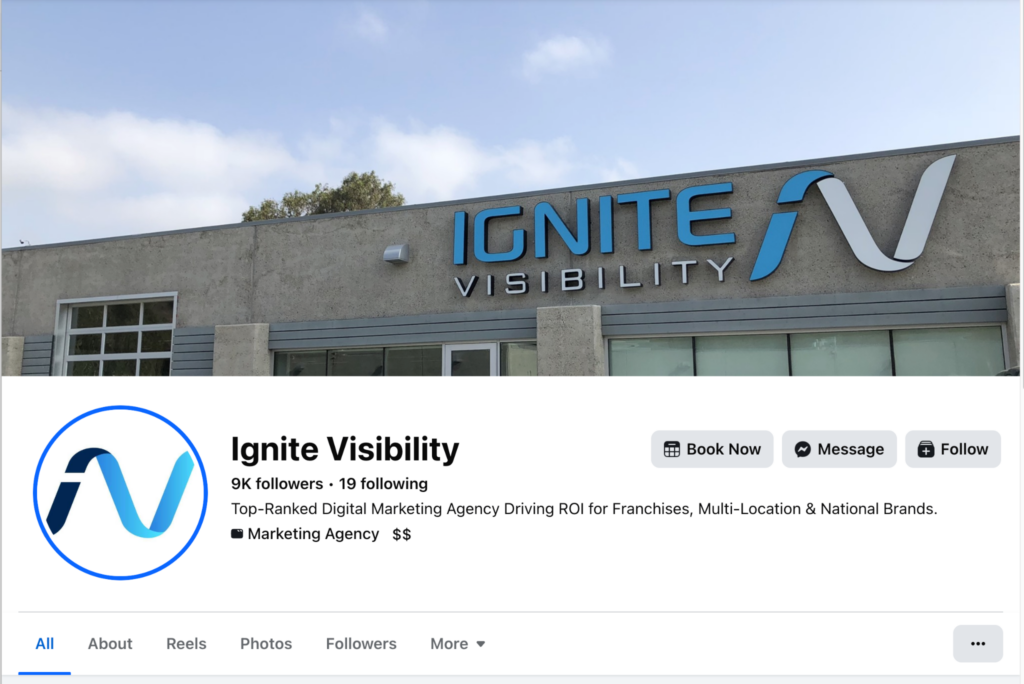
Setting up a Facebook business page is straightforward. Head to Facebook, click “Create” and select “Page”, then follow the prompts to enter your business name, category, and description.
From there, the real work begins. Facebook pages for businesses work better when they’re optimized. A complete profile builds trust and makes it easier for people to find and contact you. You’ll need to:
- Upload a profile photo (your logo works great here)
- Upload a cover image that reflects your brand’s vibe
- Fill out every section of your business info, including hours, location, website, services, and phone number.
- Set up a CTA button, such as “Book Now,” “Call Now,” or “Visit Website”
- Turn on Messenger so customers can reach you
For multi-location brands, this is where things can get tricky. Make sure every page stays true to your brand guidelines. Things like your logo, tone, and message should remain consistent across all locations. But don’t forget to let each location customize its page with accurate details, such as address, phone number, and local offers.
Define Your Strategy Before You Post
One of the biggest mistakes businesses make on Facebook is jumping straight to posting without a plan. A few random posts here and there won’t move the needle. You need a clear strategy.
Follow these steps for how to promote business on Facebook:
- Define your goals: Are you trying to build brand awareness? Drive engagement? Generate leads or sales?
- Get clear on who you’re talking to: The more you know about your ideal customer’s demographics, interests, and behaviors, the better you can tailor your content and ads to reach them.
- Choose your content mix: A good rule of thumb is to balance educational content (tips, how-tos, industry insights), promotional content (offers, product highlights, announcements), and community-driven content (customer stories, questions, local shoutouts).
- Build a content calendar to keep yourself consistent: Consistency is one of the most important factors in growing your presence on Facebook.
Create Content That Actually Performs
If you’ve been on Facebook, you know how noisy it can be. You have to earn your audience’s attention by creating content that actually gives them something, such as value, entertainment, inspiration, or a reason to trust you.
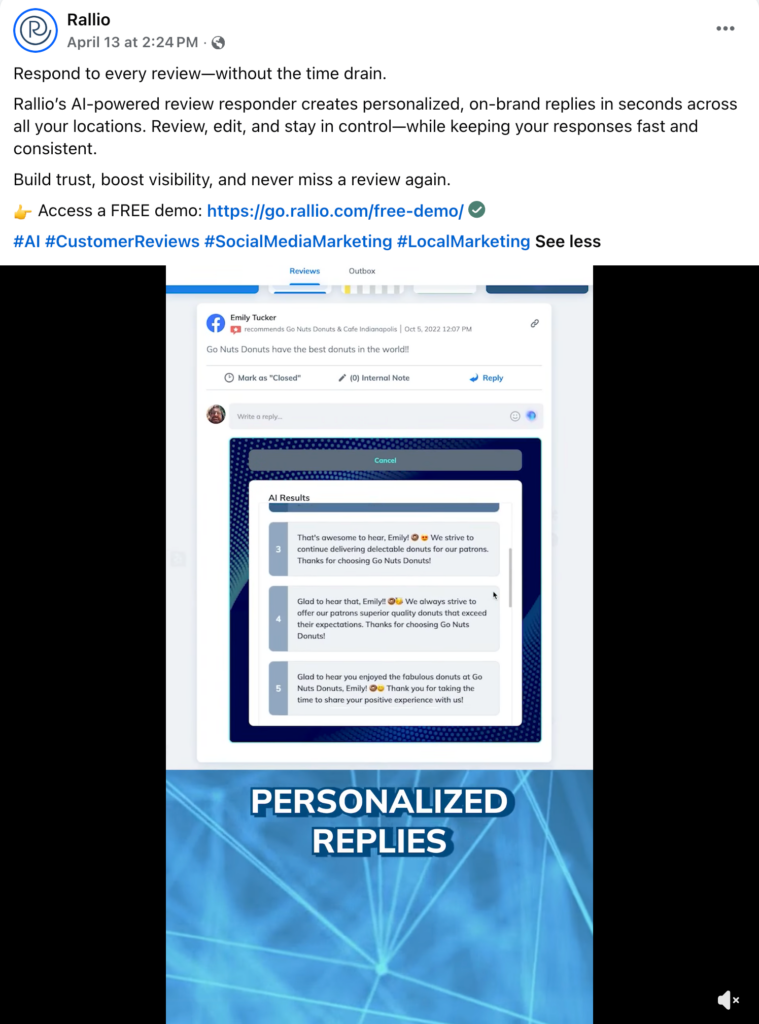
Short-form videos (Reels), eye-catching images with strong captions, Stories, and interactive content like polls and questions all perform well on Facebook business pages. But, truthfully, the format matters less than the content itself. Whatever you’re posting, make it authentic, make it visually strong, and tell a story when you can.
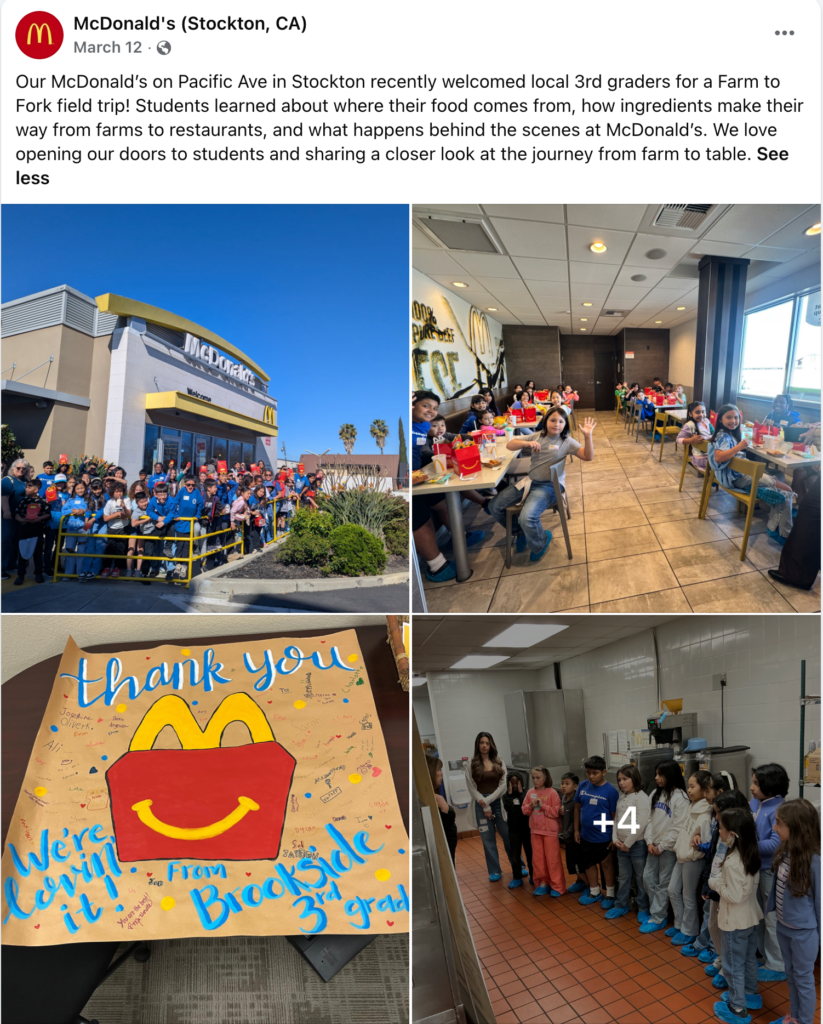
People connect with people, so showing behind-the-scenes moments, introducing your team, or sharing a customer success story will almost always outperform a generic promotional graphic.
Engage Your Audience (Don’t Just Broadcast)
Posting great content is only half the job. The other half is actually showing up in the comments, DMs, and conversations around your brand. Facebook rewards engagement, and so will your customers!
When someone takes the time to comment on your post or send you a message, responding quickly shows them you’re paying attention. It builds trust, encourages more interaction, and signals to the Facebook algorithm that your content is worth showing to more people.
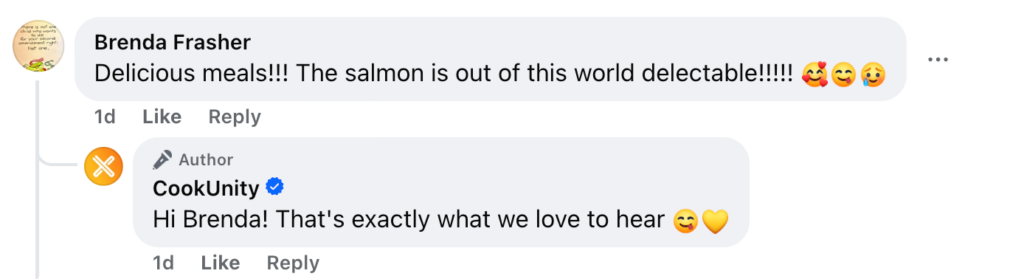
Make it a habit to check your page daily and respond to anything that comes in. Beyond just responding, actively encourage interaction by asking questions in your captions, running polls in Stories, and highlighting customers when you can. People love being seen by the brands they support.
Building a sense of community can take this even further. Facebook Groups are a powerful way to create a dedicated space for your most engaged customers or local community members.
Both in-person and virtual events are another great way to drive real-world connections. The key insight here is simple: engagement isn’t just good for relationships. It directly impacts your organic reach. The more people interact with your content, the more Facebook surfaces it to new audiences.
Use Facebook Ads to Expand Your Reach
Organic reach on Facebook is still okay, but there’s no denying that it has declined significantly over the years. If you want to grow beyond your existing audience, look into Facebook ads.
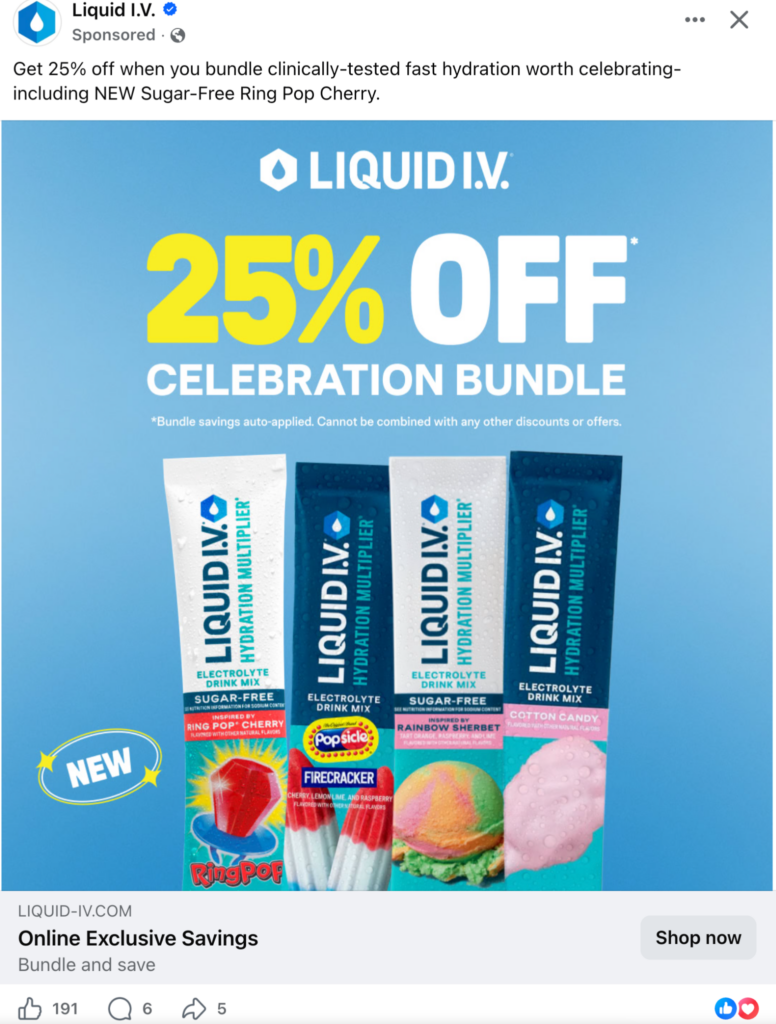
These ads fall into three main categories:
- Awareness ads (reach, video views) introduce your brand to new people.
- Consideration ads (traffic, engagement, lead generation) help warm up people who are already somewhat interested.
- Conversion ads (purchases, form fills, appointments) are designed to drive a specific action from people who are ready to buy.
Always start with a clear objective before you build a campaign. Use Facebook’s audience targeting tools to reach the right people, and layer in retargeting to re-engage people who’ve already visited your website or interacted with your page.
Test different creative and messaging combinations to see what resonates, and don’t set it and forget it. You should regularly check your progress and tweak your ads to ensure you reach the right audience.
Track Performance and Optimize
Just like any other type of advertising, you have to track certain KPIs to know if using Facebook for small business marketing is working.
The metrics that matter most depend on your goals, but generally, you want to keep an eye on:
- Engagement (likes, comments, shares, saves)
- Clicks
- Website traffic
- Leads
- Conversions
Meta Business Suite Insights, Facebook’s built-in analytics, gives you a solid overview of how your content and ads are performing. Use it regularly, not just when something feels off.
How Rallio Helps You Grow Facebook Pages for Business
Managing Facebook for one location is manageable. Managing it across multiple locations is a completely different challenge. That’s where Rallio comes in.
Rallio is a social media management platform built specifically for franchise and multi-location brands. It gives you the tools to create and schedule content across all your locations at once, while still allowing for the local customization that makes each location’s page feel relevant and authentic to its community. No more choosing between brand consistency and local personality. With Rallio, you can have both.
With Rallio’s AI-powered tools, you can generate caption ideas, create on-brand content faster, and keep your posting schedule consistent without burning out your marketing team. Engagement and review management are handled in one centralized place, so nothing slips through the cracks. And with performance tracking across every location, you always have a clear picture of what’s working, what needs attention, and where the biggest opportunities are.
Whether you’re a small business owner managing your own page or a brand overseeing hundreds of locations, Rallio scales with you.
FAQs
1. How often should businesses post on Facebook?
For most businesses, posting three to five times per week is a good starting point. Consistency matters more than volume. It’s better to post three strong pieces of content per week than to post every day with content that doesn’t deliver value.
2. Is Facebook still worth it for businesses in 2026?
Absolutely. With over three billion monthly active users and some of the most advanced advertising tools available, Facebook remains one of the highest-ROI platforms for businesses.
3. What type of content performs best on Facebook?
Short-form video and Reels consistently drive the highest engagement, but strong images with compelling captions, Stories, and interactive content like polls also perform well. Authentic, relatable content almost always outperforms overly polished promotional material.
4. Do I need to run Facebook ads to see results?
Not necessarily. Organic content and community engagement can drive meaningful results, especially for local businesses with an established audience. That said, Facebook ads significantly expand your reach and speed up growth, so incorporating even a modest ad budget into your strategy is worth it for most businesses.
5. How do I measure success on Facebook for my business?
It depends on your goals. If you’re focused on awareness, track reach and video views. If you want engagement, watch comments, shares, and saves. If you’re driving leads or sales, track link clicks, form fills, and conversions. Always tie your metrics back to your actual business objectives and skip the vanity metrics.
Learn How to Use Facebook for Business with Rallio
Facebook is one of the most powerful tools a business has access to right now, but only if you’re using it with intention.
Whether you’re managing one location or 100, Rallio gives you the tools, AI-powered support, and visibility you need to grow. Connect with Rallio to see what’s possible when your Facebook strategy actually has a system behind it.

Curren is an Account Specialist who has been working at Rallio | Powered by Ignite Visibility for the past two years. He has seven years of experience in the industry and is a graduate of The Ohio State University with a degree in Strategic Communications.
Curren partners closely with brands to craft content, campaigns, and strategies that showcase their unique voice while building authentic relationships with their communities. Passionate about maximizing brand impact through social media, Curren transforms ideas into campaigns that inspire engagement, spark conversation, and strengthen brand presence across digital platforms.