Your customers are talking. Are you listening?
Social media customer service has become one of the most powerful tools a business can use to build trust, solve problems, and keep customers coming back. It’s fast, it’s public, and it’s where your customers already are.
In this blog, Courtney Swain, Associate Director of Client Services/Product, will explain how you can use your social media to show your customers you truly care.
What You’ll Learn:
- What Is Social Media Customer Service?
- Why Social Customer Care Matters for Business & Customer Experience
- Best Practices for Social Media Customer Service
- Measure Success: Social Support Metrics
- Common Challenges & How to Overcome Them
- How to Implement Customer Service on Social Media with Rallio
- FAQs
An Expert Opinion on Social Media Customer Care
Gone are the days when social media was just a marketing tool. Now, it’s a little bit of everything all rolled into one – marketing, sales, and customer service.
Now, customers are likely to go to your social media channels when they want to rave about your product or service, or when they want to complain about it. The good news, though, is that you can win them back. In fact, 51% of consumers said that they are likely to become repeat customers of a brand if it responds to them on social media.
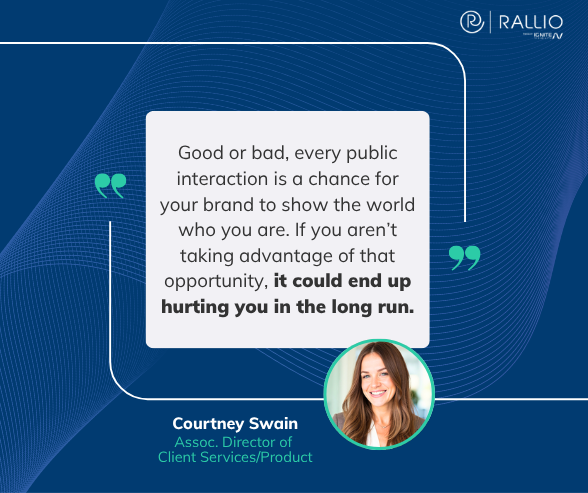
Good or bad, every public interaction is a chance for your brand to show the world who you are. If you aren’t taking advantage of that opportunity, it could end up hurting you in the long run.
What Is Social Media Customer Service?
Social media customer service is the practice of using social platforms such as Facebook, Instagram, X (formerly Twitter), and TikTok to assist customers with questions, complaints, and feedback. It happens both publicly in comments on posts and privately through direct messages. Think of it as your customer support desk, just moved into the middle of your customers’ daily scroll.
This is pretty different from traditional support channels. When a customer sends an email or makes a phone call, that conversation is private. Only your team and the customer see it.
On social media, everything is more visible. A helpful reply can impress hundreds of followers. A slow or cold response? Just as many people will notice that, too.
Social customer care is built on four core actions:
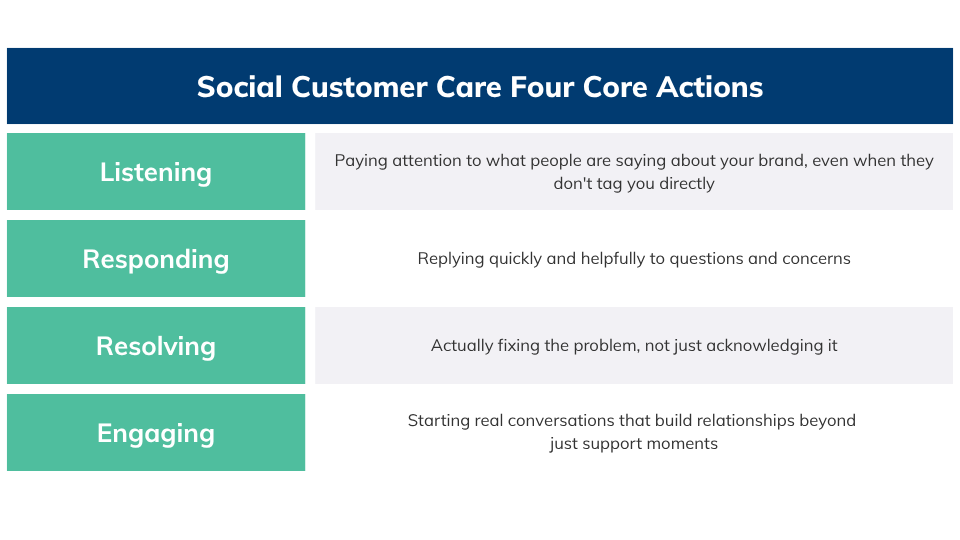
When you do all four well, social media support becomes one of your strongest brand assets.
Why Social Customer Care Matters for Business & Customer Experience
To put it simply, people want to feel heard and they want help – fast. When you do it right, social media customer service can deliver on both.
Real-time responses make a real difference in how customers feel about your brand. When someone posts a frustrated comment and gets a warm, helpful reply within minutes, that frustration often turns into appreciation. That single interaction can flip a negative experience into a loyal customer moment.
There’s also something powerful about public conversations. When your audience sees you handle a complaint gracefully and transparently, it builds trust, not just with that customer, but with everyone watching. That kind of brand visibility is worth more than almost any paid advertisement you could run.
Customer service through social media also builds community. Responsive brands feel human. Customers start to feel like they’re part of something, not just buying a product or service. That emotional connection drives loyalty and word-of-mouth referrals that money simply can’t buy.
And from a competitive standpoint? Most businesses are still doing this poorly. That means showing up consistently and warmly on social media puts you well ahead of competitors who are slow, robotic, or simply absent.
Best Practices for Social Media Customer Service
Getting social media support right doesn’t happen by accident. It takes a clear approach and a commitment to a few core habits.
1. Respond Quickly
Speed matters more than almost anything else in social customer care. A response within an hour is ideal for urgent issues. Even a quick “We got your message and we’re looking into it!” is better than silence. Set response time expectations for your team and stick to them.
2. Personalize Every Interaction
Nobody wants to feel like they’re talking to a template. Use the customer’s name. Reference their specific situation. Personalized replies feel more human, and that will build trust.
3. Monitor Proactively
Don’t wait for customers to tag you to know what’s being said. Set up social analytics tools that track keywords, brand mentions, and relevant hashtags. Catching a complaint before it becomes a trending thread gives you the chance to resolve it quietly and quickly.
4. Turn Feedback Into Action
Use each piece of feedback you receive through customer service on social media as data to improve. Patterns in complaints point to product problems. Recurring questions suggest gaps in your messaging. Use what customers tell you to get better, and when you do, let them know. That kind of transparency closes the feedback loop and earns serious loyalty.
Measure Success: Social Support Metrics
You can’t improve what you don’t measure. Tracking the right KPIs helps you understand how well your social media customer care efforts are actually working.
Here are the key metrics to watch:
- Response time: Track how quickly your team responds across all platforms.
- Resolution rate: What percentage of issues are being fully resolved on social, versus needing to be escalated?
- Message volume: Track how many inquiries come in over time to help you spot trends and staff accordingly.
- Sentiment: Sentiment tracking tools can show you shifts in how people feel about your business.
- Engagement rate: High engagement on support interactions signals that your tone and approach are resonating.
Review these metrics regularly and use them to coach your team, refine your process, and report meaningful results to leadership.
Common Challenges & How to Overcome Them
Even well-run teams run into obstacles with social media support. Here’s how to handle the most common ones.
- Resource constraints: You don’t have to hire more people. You just have to work smarter. Prioritize your highest-traffic platforms, use automation for routine inquiries, and create templates that make responding faster without sacrificing personality.
- Negative public feedback: Use a negative review as an opportunity to respond calmly, take accountability where it’s warranted, and move the detailed conversation to DMs when appropriate. Never delete legitimate criticism or get defensive publicly. A measured, empathetic response to a tough comment often wins more trust than a glowing review ever could.
- Maintaining brand voice at scale: This is one of the trickiest challenges, especially for franchises where dozens of locations might be managing their own social accounts. The solution is a clear, documented brand guide, regular training, and a centralized tool that gives oversight without micromanaging every reply.
How to Implement Customer Service on Social Media with Rallio
Speaking of a centralized tool, let’s take a look at how Rallio can help you improve your approach to social customer service.
Strategy Foundations
Build a foundational strategy by performing an honest audit of where your customers are actually reaching out. Which platforms are attracting your target audience? Where are you getting the most comments? Focus your energy there first.
Then align your customer service KPIs, such as response time and resolution rate, with your social media performance goals so every team member understands how their work connects to the bigger picture.
Build Your Playbook
Document everything. Your playbook should include standard responses for different types of inquiries, clear escalation rules for issues that need management or legal review, and a tone guide that defines how your brand sounds in a support context.
Tools & Workflow
A centralized inbox that pulls messages and comments from all your social platforms into one place means nothing falls through the cracks. Use Rallio to respond to reviews manually or take advantage of Rallio’s AI features that pull in customer data like names and context instantly, making every reply faster and more personal.
FAQs
1. What is social media customer service?
Social media customer service is the practice of using social platforms to answer customer questions, resolve complaints, and build relationships. It takes place both publicly in comments and privately through direct messages.
2. Why is social media customer service important for businesses?
It meets customers where they already are, improves satisfaction through fast responses, and builds public trust through visible, transparent interactions.
3. Which social media platforms are commonly used for customer service?
Facebook, Instagram, and X (Twitter) are the most widely used. Depending on your industry and audience, TikTok and LinkedIn are also growing.
4. How quickly should businesses respond to customers on social media?
You should aim to respond to your customers within one hour for urgent issues and within 24 hours for general inquiries. Faster is always better. Speed signals that you take your customers seriously.
5. How can businesses manage social customer service across multiple locations?
If you have multiple locations, using a centralized social media customer service platform like Rallio gives each location the ability to manage its own community while giving leadership visibility and control across all accounts.
Streamline Your Social Media Management with Rallio
Great social media customer service doesn’t happen by chance. With the right strategy, the right habits, and the right platform, your team can respond faster, resolve more, and build the kind of customer relationships that fuel real business growth.
Rallio is built to make that possible at every level of your organization, from a single location to a national franchise network. Whether you’re just getting started with customer service through social media or you’re ready to take an existing program to the next level, Rallio gives you the tools, structure, and support to do it with confidence.
Are you ready to explore your options? Schedule a no-strings-attached demo today!

Courtney is the Associate Director of Client Services/Product at Rallio, Powered by Ignite Visibility. With over four years of experience in SaaS and more than a decade in customer support, she brings a customer-first approach to building strong, lasting partnerships. She leads a support team while managing key client relationships and serving as a bridge between customers and internal product and engineering teams. Her focus is on delivering measurable value, ensuring client satisfaction, identifying growth opportunities, and translating real customer needs into meaningful improvements for data-driven technology solutions.