
Social media has changed since it first came on the digital marketing scene. Today’s consumers expect content that speaks directly to them, their city, their community, and their culture.
This is especially true for franchises and multi-location businesses trying to stand out in competitive local markets. In this blog, Tyler Phillips, Creative Marketing Manager, will go over why local social media marketing is one of the most powerful tools for brands that want to connect with real people in real places.
What You’ll Learn:
- What Is Local Social Media Marketing?
- Why Localization Matters for Multi-Location Brands
- The Biggest Challenges of Localized Social Media Marketing
- Key Elements of a Successful Social Media Localization Strategy
- How AI Helps Scale Localized Social Media Marketing
- Best Practices for Local Social Media Marketing
- How Rallio Simplifies Local Social Media Marketing
- FAQs
Expert Opinion on Local Social Media Marketing
Local social media marketing has become a fundamental shift in how brands build relationships with their communities. Everyone wants to feel seen and heard, and sharing localized and personalized content is one of the best ways to get likes, shares, and engagement.
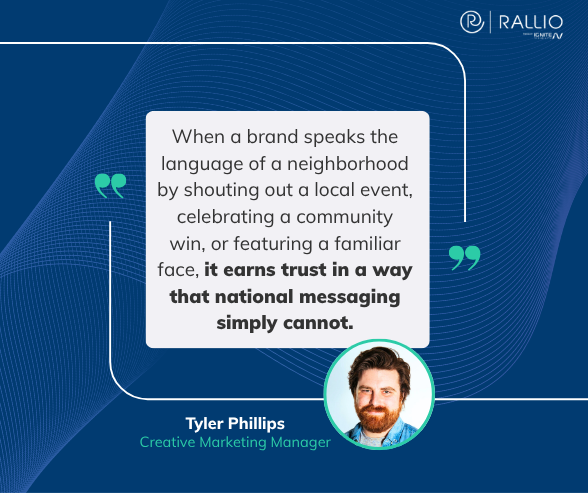
When a brand speaks the language of a neighborhood by shouting out a local event, celebrating a community win, or featuring a familiar face, it earns trust in a way that national messaging simply cannot.
For multi-location brands, this is the difference between a social presence that performs and one that just exists. Even if you’re a national franchise, you still need to take the time to become an involved member of each franchise’s community.
What Is Local Social Media Marketing?
Local social media marketing is the practice of creating and sharing content on social platforms tailored to a specific geographic area. Instead of broadcasting a single message to a national audience, local social media marketing targets people in a specific city, neighborhood, or region.
This differs from traditional social media marketing, which typically uses broad, brand-wide messaging pushed from a central account. Localized social media goes deeper by adapting the tone, imagery, offers, and even language to match the local audience.
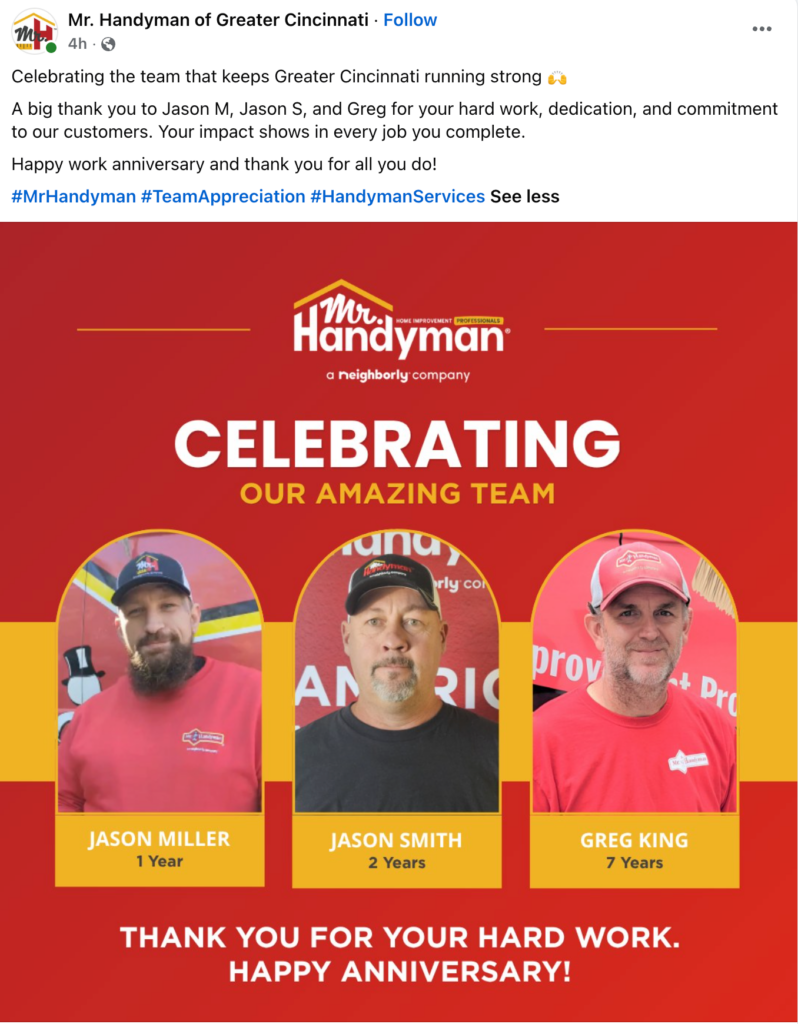
Localized content performs better because people respond to things that feel personal. This could be done through your copy or your imagery.
For example, a photo of a storefront that someone recognizes, or a caption that references a local neighborhood, instantly builds a connection. Other examples of effective social media localization include:
- Regional promotions tied to local events or seasons
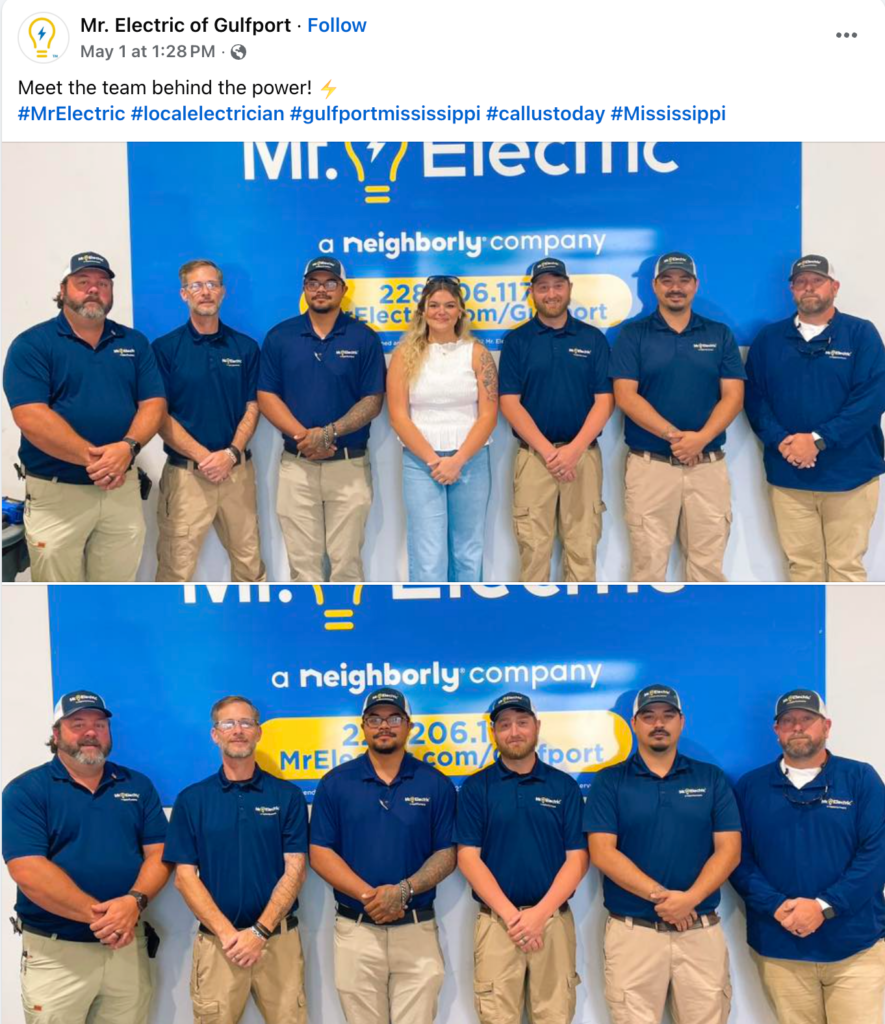
- Location-specific imagery that features real local spaces and faces
- Community events like sponsorships, fundraisers, or local partnerships
- Localized captions and messaging that match the tone and culture of the area
- Posts about sponsorships or partnerships with local organizations
Why Localization Matters for Multi-Location Brands
Consumers are smart. They can tell when content was made for everyone, but really made for no one.
Instead of looking for broad content, they now want to see content that reflects their community and shows a business or brand actually knows them, not just their zip code.
When brands invest in local marketing, they build something far more valuable than clicks. They build trust. Authentic, community-driven content drives real engagement in the form of more comments, more shares, and more return visits. Over time, it creates loyal customers who feel a genuine connection to a local business, even if it’s part of a larger national chain.
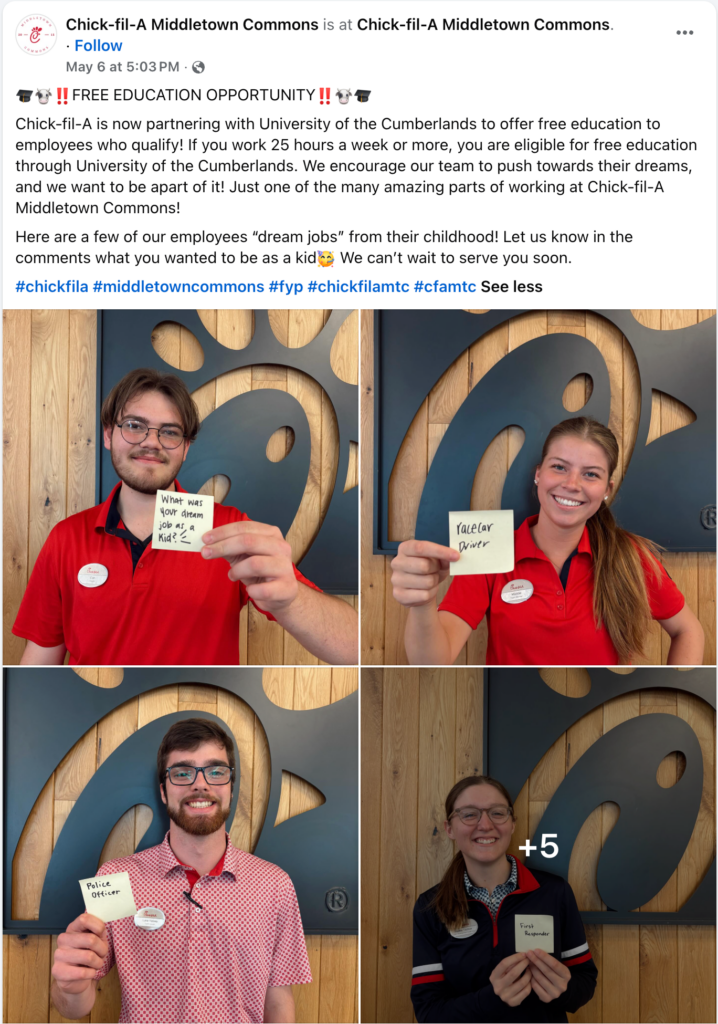
The challenge for multi-location brands is balancing corporate brand consistency with local flexibility. Every location needs to stay on-brand, but it also needs the freedom to show up as part of its specific community.
Localization also plays a direct role in online visibility. Geo-targeted content and localized profiles help businesses show up in local search results and discovery feeds. So when someone is searching for “pizza near me,” the pizza shops with localized profiles are going to get their attention.
The Biggest Challenges of Localized Social Media Marketing
Localized marketing sounds simple on paper. In practice, it comes with real operational complexity, especially when you’re managing dozens or hundreds of locations. Here’s where most brands run into trouble.
Maintaining Brand Consistency
Every location is a reflection of the larger brand. When content goes off-message, it doesn’t just affect one store. It can impact brand perception across the board.
Keeping messaging aligned across all locations requires clear guidelines, approved assets, and an oversight system. Without that structure, inconsistent content finds its way onto feeds.

Scaling Content Across Multiple Locations
Creating custom content for even ten locations is a significant workload. At fifty or a hundred locations, it becomes nearly impossible to do manually.
Workflows, approvals, and version control all add layers of complexity. Many brands struggle to scale local content creation without sacrificing quality or speed.
Creating Truly Localized Content
Swapping a city name into a generic post is not localization. Real localization requires understanding local culture, seasonal trends, and audience behavior.
What works in Austin may not land in Boston. Effective local social media marketing means doing the research and tailoring content in a meaningful way.
Managing Multiple Accounts Efficiently
Each location may have its own Facebook page, Instagram account, Google Business Profile, and more. Scheduling posts, monitoring comments, responding to reviews, and tracking performance across all of those accounts is a full-time job, which is often spread across teams with different skill levels and priorities.
Key Elements of a Successful Social Media Localization Strategy
Social media marketing for local businesses contains certain key elements that all together to drive real results.
Localized Content Creation
Good local content adapts messaging for each specific market. Content that feels like it was created by someone who actually lives there always performs better than generic, plug-and-play content.
Local Social Engagement
Engagement is a two-way street. Responding to comments and reviews at the local level shows customers that someone is listening. Joining local community conversations by tagging local partners or commenting on community pages also helps builds a local presence.
Geo-Targeted Campaigns
Paid social campaigns can be dialed in to specific regions, cities, or even zip codes. Running region-specific promotions and ads ensures that the right offer reaches the right audience.
Localized Posting Schedules
Timing matters. A post that goes live at 8 AM on the East Coast hits at 5 AM on the West Coast. Local posting schedules account for time zones and local audience behavior patterns to maximize reach and engagement.
Employee Advocacy & User-Generated Content
Local teams are a brand’s best storytellers. Encouraging employees to contribute photos, videos, and stories creates authentic content that no marketing team can replicate. User-generated content from customers adds another layer of genuine, community-driven social proof.
How AI Helps Scale Localized Social Media Marketing
Scaling local social media marketing across dozens or hundreds of locations is one of the biggest operational challenges brands face. This is where AI becomes a game-changer. AI tools can generate localized captions and messaging quickly.
AI also helps maintain brand voice while allowing for meaningful customization. Instead of replacing the creative process, it accelerates it. Workflows, approvals, and scheduling can all be automated to reduce the manual burden on both corporate teams and local operators. AI-powered tools can also surface local engagement opportunities by flagging trending topics or community conversations worth joining.
That said, human oversight remains essential. AI is a powerful assistant, but the best local content still reflects genuine human knowledge of a community. The goal is to use AI as a tool while keeping real people in the loop for authenticity and accuracy.
Best Practices for Local Social Media Marketing
Great local marketing doesn’t happen by accident. It requires smart systems and a genuine commitment to community.
Create a Centralized Brand Strategy
Start with a strong foundation. Clear brand guidelines, approved templates, and an asset library give local teams everything they need to create on-brand content. This makes it easy for them to remain consistent without limiting their creativity.
Empower Local Teams
Local teams know their communities best. Give them the flexibility to personalize content and share stories that reflect their specific location. Community-focused storytelling is some of the most powerful content a brand can produce.
Use Data to Refine Local Strategies
Performance data tells you what’s working. Monitor local engagement metrics, track which content drives the most response in specific markets, and use those insights to continually refine the strategy. What resonates in one market may inspire a winning approach in another.
Prioritize Community Over Promotion
Social media audiences can sense when they’re being sold to. Instead, build a relationship by encouraging local involvement, highlighting customer stories, and celebrating the community first. Sales and conversions follow naturally when trust is established.
Keep Localization Consistent Across Platforms
A brand’s local presence should feel cohesive everywhere customers look. That means aligning messaging across Facebook, Instagram, TikTok, LinkedIn, and Google Business Profiles. Each platform has its own style, but the local voice and core message should remain consistent.
How Rallio Simplifies Local Social Media Marketing
Managing local social media at scale is where most brands hit a wall. Rallio is built to break through it. With a unified dashboard, brands can manage every location’s social presence from one place. It saves your team from jumping between accounts or losing track of what’s been posted where.
Rallio also:
- Allows content to be customized for each location without starting from scratch, supporting true post localization
- Speeds up the process while keeping messaging on-brand through AI-powered localized content creation
- Ensures nothing goes live without the right eyes on it with centralized approvals and scheduling workflows
- Helps surface authentic, community-driven content with tools for employee advocacy
- Provides built-in analytics to track local performance so brands know what’s working
FAQs
1. What is local social media marketing?
Local social media marketing involves creating and sharing social media content tailored to a specific geographic area. It focuses on reaching local audiences with relevant, community-driven messaging rather than broad, national content.
2. Why does local marketing matter for multi-location brands?
Local marketing helps multi-location brands build trust and authentic connections in each community they serve. It drives stronger engagement, improves local visibility, and builds customer loyalty that generic national content cannot.
3. How can you do local marketing on social media?
Effective local social media marketing includes creating location-specific content, running geo-targeted ads, engaging with local communities, using local hashtags, and encouraging employee advocacy and user-generated content at each location.
4. What are the key elements of local social media marketing?
The key elements include localized content creation, local engagement, geo-targeted campaigns, location-specific posting schedules, and leveraging employee advocacy and community-generated content to keep messaging authentic and relevant.
Rallio: Streamlining Localized Social Media Marketing
Local social media marketing is one of the highest-impact strategies a multi-location brand can invest in, and Rallio makes it easier to execute than ever before. It gives brands everything they need to show up authentically in every community they serve, from AI-powered content creation to centralized scheduling and local analytics
Ready to see what’s possible? Explore Rallio today and discover how smarter local social media marketing can drive real growth at every location.

Tyler Phillips is a Creative Marketing Manager at Rallio | Powered by Ignite Visibility, with over seven years of experience in SaaS and social media marketing and more than sixteen years in online video production. Known for his creative thinking and innovative problem-solving, Tyler specializes in designing and executing strategic digital advertising and content marketing campaigns. His passion lies in bridging creativity and data—turning complex ideas into simple, impactful brand narratives that connect, engage, and inspire.