
Is keeping up with your social media draining time and resources? You aren’t alone!
That’s why so many brands have turned to social media publishing tools to help them keep their social media content consistent, cohesive, and engaging.
In this blog, Joe Kennedy, Social Media Specialist, will cover everything you need to know about social publishing, what to look for when choosing a tool, and why it matters if you want to build a strong and sustainable brand in today’s busy digital economy.
What You’ll Learn:
- What is Social Media Publishing?
- Why Brands Should Care
- Core Elements & Best Practices
- Choosing the Right Content Tools and Workflows
- Common Pitfalls and How to Avoid Them
- Practical Checklist for Getting Started
- FAQs
Expert Opinion
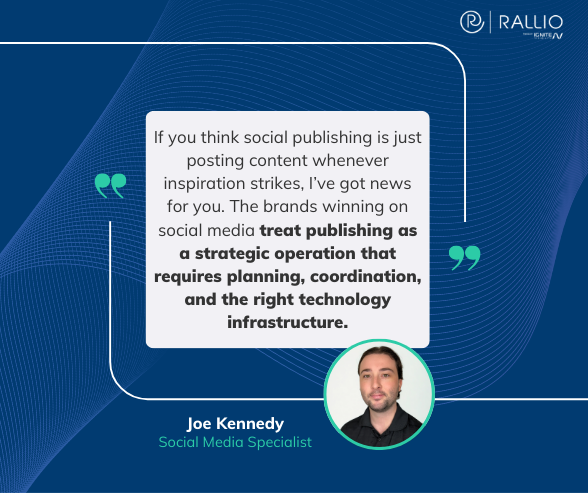
If you think social publishing is just posting content whenever inspiration strikes, I’ve got news for you. The brands winning on social media treat publishing as a strategic operation that requires planning, coordination, and the right technology infrastructure. Most of them even use dedicated social media publishing tools to make their posting schedules more consistent, which typically generates higher engagement rates.
The shift toward automation and AI-assisted content tools reflects a broader truth: manual publishing doesn’t scale. Franchisors managing multiple locations can’t rely on individual franchisees to maintain brand standards without centralized systems. Smart social software gives you control without creating bottlenecks, ensuring every location can participate in your social strategy while staying on-brand.
The best performing brands use publishing platforms that combine scheduling automation with human oversight. This hybrid approach maintains authenticity while eliminating the chaos of managing decentralized social media.
What is Social Media Publishing?
Social media publishing is the complete process of planning, creating, and distributing content across social media platforms. It’s not just hitting the post button. It’s a coordinated workflow that ensures your brand shows up consistently with the right message at the right time.
It involves three key components working together:
- Planning: This is where you’ll decide what types of content you’ll create and which channels you’ll use to reach your audience. It keeps your social presence aligned with your business goals, rather than being reactive and scattered.

- Creation: This is where you’ll draft copy, design visuals, and format your content to meet each platform’s specific requirements. Your content is where you bring your brand voice to life through images, videos, captions, and hashtags in the hopes of resonating with your target audience.
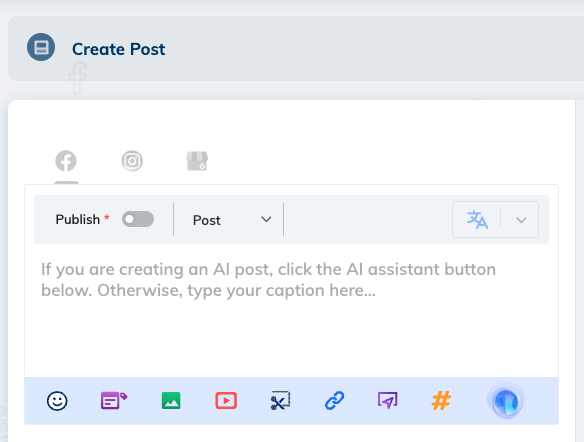
Rallio’s Post Creator - Distribution: During this phase, you schedule posts, publish content across multiple platforms, and maintain a consistent content calendar. During this phase, a social media publishing tool becomes invaluable, especially when managing multiple accounts or locations.

Why does this matter for your brand’s social strategy? Publishing creates visibility. Without consistent content distribution, you may lose engagement as you fail to routinely connect with audiences.
For multi-location businesses, effective social publishing ensures every franchise location or regional office maintains brand standards while connecting with local communities. It’s the infrastructure that makes scalable social media possible.
Why Brands Should Care
To stay top of mind for your customers, you need to be where they are. For most brands, that’s on social media. Every post is an opportunity to get in front of the right people, whether someone is scrolling during their morning coffee or researching options before making a purchase decision.
Instead of letting your brand story be told through sporadic, disconnected posts, publishing consistent content will help you create a cohesive voice that reinforces your positioning and values. This is even more important for franchise networks, where many locations are expected to support a single brand.
Core Elements & Best Practices
When developing a social media publishing calendar, there are a few things to remember. Follow this list of best practices to ensure that you get the most out of your social media content.
- Start small and build momentum: Trying to publish daily across six platforms from day one is a recipe for burnout. Instead, start posting consistently on one or two platforms, gradually expanding your schedule as you establish a routine.
- Know your audience and think like a customer: What questions do they ask? What problems keep them up at night? Tailor your content to actual audience behavior rather than what you assume they want. For franchisors, this means understanding both the franchisee audience and the end consumer.

- Platform-specific content is non-negotiable: Adapt your format, tone, and even your core message to suit each channel’s unique culture and technical specifications. What works on LinkedIn will probably fall flat on TikTok.
- Maintain your content calendar: This is important not only for you, but also for your audience. By maintaining a consistent social media publishing calendar, they will start to know what to expect from you. Regular scheduling supports consistency and can keep your audiences engaged, but remember that tools and posting frequency don’t guarantee engagement or reach.
- Post when the data tells you to: Monitor your analytics to see when your specific audience is most active and engaged. These optimal windows vary by industry, platform, and audience demographics, so don’t be afraid to test different times and days to see what works best for you.

- Monitor and refine weekly: Set aside time to review what’s working and what’s not. Look beyond vanity metrics to engagement quality, click-through rates, and sentiment. In addition to engagement, look at location-level inquiries, bookings, and website conversions to tie your strategy to revenue and ROI. For more effective tracking, you should also include campaign-tagged links for each location’s relevant landing page, which will help follow social users’ journeys from link clicks to conversion.
- Automate by using an app for posting to all social media platforms: Publishing tools streamline your workflow and maintain consistency without requiring you to manually log into each platform daily.
- Track all publishing failures and approval delays to assess workflow performance: By closing in on all identifiable problems with your posts and scheduling issues, you can better spot and resolve bottlenecks affecting your workflow.
Choosing the Right Content Tools and Workflows
There are a lot of social media publishing tools out there, so how do you know which one is right for you? That depends on your business’s unique needs.
For multi-location brands, look for platforms offering robust security and compliance features. These features will help you protect brand integrity while giving local teams the freedom they need to connect with their markets.
If you are active on a number of different platforms, you’ll also need a social software that allows for cross-platform scheduling. The right social media publishing tools should let you plan and publish to supported major platforms from a single dashboard. Switching back and forth between all of the apps can get tiring, so this feature will remove that challenge.
Other important content tools to look for include AI insights for data analysis and topic ideas, a visual content calendar, and team collaboration features that streamline approval workflows and communication to eliminate miscommunication and confusion.
For franchise and local brand networks, prioritize tools that offer:
- Role-based permissions that let corporate maintain oversight while franchisees execute locally.
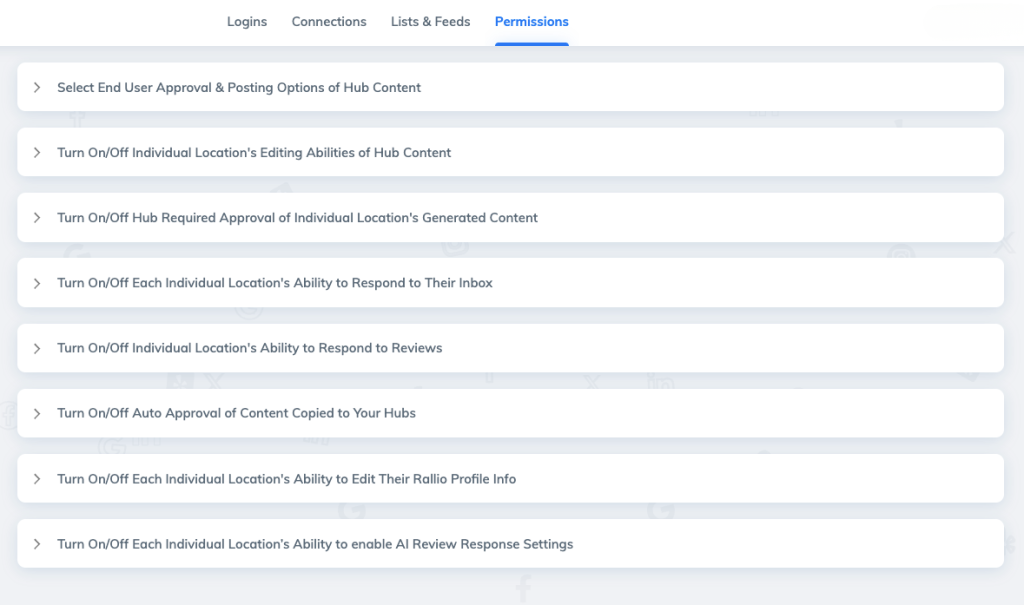
- Shared content libraries let you distribute approved assets that locations can customize.
- Content repurposing features help you maximize the value of every piece you create. Meta, in particular, emphasizes the use of original content, making it important to avoid lightly editing other creators’ content and presenting it as your own original creation. Instead, find ways to turn your own content into reusable pieces to simplify content creation and maximize its longevity.
- Local customization options ensure each location can add their voice while staying on-brand. For example, you could pair an approved campaign’s more generic existing content with original location photos, staff insights, and a valid local offer.

Social software like Rallio integrates these capabilities specifically for multi-location businesses. Features like the content creator tool help streamline production, multi-platform scheduling handles distribution, and Employee Advocacy features turn team members into brand ambassadors.
Rallio supports a range of major social media publishing platforms, including:
- X
- TikTok
- Google Business Profile
Rallio’s AI content creation tool also makes it easy to set up text, image, and video posts that align with corporate and local needs.
To set up social media publishing, Rallio simply requires:
- Corporate or agency partner credentials
- Active business social media accounts on supported social media publishing platforms
To get the most from your publishing efforts, follow this basic workflow:
- Corporate creates the template for use across platforms and locations.
- Each location adds unique details for customization.
- The designated reviewer approves the post.
- The publisher schedules the post in a social media publishing calendar.
- The owner checks the publication to ensure compliance and correctness.
Corporate should also clearly indicate which fields locations can edit in each template, along with who handles any overdue approvals to keep things moving.
Common Pitfalls and How to Avoid Them
Even those most valuable social media content tools can fail if they aren’t used correctly. Here are some of the most common pitfalls of social media publishing and how you can avoid them.
- Missing operational checks: Look for expired connections, failed posts, misaligned time zones, and outdated offers to keep your social media publishing strategy working the way it should.
- Posting inconsistently or without a plan: This will kill your momentum before it starts. The fix is simple but requires commitment: build a realistic content calendar and stick to it.
- Ignoring analytics: Set aside time weekly to review metrics and monthly to assess broader trends. Let data inform your strategy evolution.
- Neglecting local optimization: This is particularly damaging for franchise networks. Corporate content that doesn’t allow for local voice or relevance feels disconnected from community needs. Build flexibility into your publishing system so locations can add local flavor while maintaining brand standards.
- Failing to align with brand guidelines: This pitfall creates inconsistency, confuses customers, and dilutes brand equity. Be sure to implement clear guidelines and the right tools to ensure every member of your team has what they need to be successful.
- Posting before review: Perform human review of all AI-generated facts, local details, and image rights prior to approval.
To mitigate the risk of serious publishing issues, assign someone to handle all failures and, in the event of emergencies, pause scheduled posts until you’ve resolved all issues.
While many worry about how heavily relying on third-party social media publishing tools can reduce reach or engagement, the right tools can be just as effective as scheduling and posting natively. It all comes down to the scheduling and content of the posts themselves, not the platform you use for posting.
Practical Checklist for Getting Started
Ready to bring social publishing to your marketing strategy? Start here:
- Define two to three content pillars that align with your specific business goals. For example, a travel brand’s social media strategy might focus on destination highlights, travel tips, and individual traveler stories, while a restaurant franchise may use social media publishing to promote menu features, behind-the-scenes footage, or community involvement.
- Choose one to two platforms to focus on with your social media publishing tools. Go where your audiences spend most of their time and try to optimize for the platforms that can benefit you the most, which will keep you from spreading too thin.
- Develop visual templates and brand assets ready for social media publishing. Create a go-to library of logos, fonts, color codes, image templates, and caption frameworks to speed up content creation while keeping it consistent.
- Set up a simple social media publishing calendar. Map all topics, assign someone to create content around them, and set clear publishing dates, which together will foster more consistency and better long-term results.
- Connect all relevant accounts and assign owners. Ensure your social media publishing tools are connected to the social media platforms themselves, and establish who is responsible for everything from scheduling and posting to approval.
- Customize content to speak to local audiences. For franchise and multi-location marketing, align your social media publishing strategy with local needs, adapting content to speak to specific communities while adhering to corporate brand standards.
- Create a strict approval process. Before publishing, make sure there’s an approval process in place with assigned owners to check for compliance and any other issues that could compromise your posts.
- Confirm that posts are published. After publishing each post, confirm that it appears on the profile.
FAQs
1. What does “social media publishing” actually mean?
Social media publishing is the process of planning, creating, and distributing content across social media platforms. It includes developing a content strategy, scheduling posts, and coordinating publication across multiple channels to create consistent messaging and visibility for your brand.
2. How is social media publishing different from social media management?
Social media publishing focuses specifically on content creation and distribution including planning, scheduling, and posting content across platforms. Social media management is broader and includes community engagement, customer service, reputation monitoring, paid advertising, analytics, and strategy development. Publishing is one component of comprehensive social media management, handling the “what and when” of posting content.
3. How often should my business publish on social media?
How often you publish on social media depends on your platform, audience, and resources, but consistency matters more than volume. We recommend starting out with 3-5 posts per week on primary platforms like Facebook and Instagram and 2-3 times weekly on LinkedIn. Monitor engagement metrics to find your optimal cadence. It’s better to post twice weekly consistently than daily for two weeks, then disappear.
Also, test a manageable schedule against local audience response and business results, measuring the results to inform future posting decisions.
4. Is there an app for posting to all social media platforms?
Yes, social media publishing tools let you schedule and post to multiple platforms from one dashboard. These apps support major networks including Facebook, Instagram, LinkedIn, Google Business Profile, and others, eliminating the need to log into each platform separately. Look for tools offering cross-platform scheduling, visual calendars, and analytics. Platforms like Rallio are designed specifically for multi-location businesses needing centralized publishing control.
5. What are the risks of automating social media publishing?
Relying too much on automation when publishing content on social media can compromise your efforts with the loss of a human touch, tone-deaf timing, delayed error correction, and even algorithm penalties, which is why human intervention is always needed to supplement automation.
6. How are social media platforms affecting the publishing industry?
Social media tools are making it easier than ever to create content, schedule, and optimize posts. Additionally, there are numerous third-party scheduling and posting tools like Rallio that can further simplify publishing, creating a centralized dashboard from which publishers can manage and post content across multiple platforms.
7. How is social publishing most akin to traditional media?
Like traditional media, social publishing is all about attracting human attention from audiences in an ad-supported model. The main goal of social publishing is to drive brand engagement, much like TV and print ads, but with the added ability to engage in two-way conversations with audiences.
Simplify Your Social Media Publishing with Rallio
Ready to transform your social media publishing from chaotic to strategic?
Rallio can bring it all together, by combining advanced AI content tools with a scheduling system and a strong social ecosystem. Our platform works for small businesses, enterprise corporations, and multi-location brands and franchises that need consistency at scale.
Are you ready to explore how the right publishing tools can streamline your workflow, empower your locations, and deliver measurable results across every channel? Request a free, no-strings-attached demo of Rallio today!

Joe Kennedy is a Social Media Specialist at Rallio | Powered by Ignite Visibility with over seven years of experience helping brands and franchises build strong, engaged online communities.
With a degree in Sociology from the University of California, Santa Barbara, he brings a unique perspective to social media, connecting insights about human behavior to digital engagement strategies. Joe has worked extensively with franchises, developing social media publishing plans that balance brand consistency with local relevance, driving both engagement and measurable business results.
Passionate about the intersection of sociology and social media, he leverages data, trends, and audience insights to help clients create authentic connections and grow their presence across platforms.