
If you want your neighbors to find you, generic brand pages won’t cut it. Your landing pages need to speak directly to your local audience. If not, you’re likely going to lose to a competitor who is.
In this blog post, Tyler Phillips, Creative Marketing Manager, will explain how to create location-specific landing pages that satisfy local search intent and connect with the right audiences. Whether you’re a single brick-and-mortar business or a brand managing multiple locations, this blog will teach you how location-specific landing pages will support your broader SEO strategy and help you get found by the right local audiences.
My Expert Opinion on Creating Location-Specific Landing Pages
The data backs it up: search queries with the words “near me” and “close by” have increased by a staggering 900% within a two-year period, and 46% of consumers prefer to purchase from companies with a local presence.
But here’s what the stats don’t tell you: local landing pages aren’t just another thing to check off on your SEO to-do list. When they’re done right, they help build trust, lead conversions, and improve your local discovery all at once.
A well-written local SEO landing page tells a searcher, “Hey, we’re here, we know your area, and we’re exactly what you’re looking for.” That kind of specificity is what turns a casual browser into a genuine lead. They also provide a critical entry point to the top of the funnel. With the right structure and messaging, they’re what nudge people from awareness all the way down to a conversion.
Multi-location brands face a different challenge. You need to create a page for every location that actually builds local relevance without falling into the trap of thin or duplicate content. Each page needs to feel like it was built for that community, not copied and pasted with a city name swapped out. That’s the difference between a local landing page that makes an impact and one that gets ignored.
Why Location-Specific Landing Pages Matter
When someone searches for a business or service in their area, they’re signaling exactly where they are in the buying journey. Location-based landing pages are built to meet them at that exact moment.
At the informational stage, these pages answer the “who, what, and where” questions local searchers ask. At the commercial and transactional stages, they become the page that seals the deal.
The visibility benefits alone make location based landing pages worth the investment. Properly optimized location landing pages can improve your organic search rankings for location-specific keywords and boost your relevance in Google’s Map Pack. Plus, they give you a destination URL for your Google Business Profile.
On the paid side, dedicated local landing pages can also improve your PPC quality scores. The higher your score, the lower your cost per click and the higher your ad performance.
Beyond visibility, there’s the trust factor. When a potential customer lands on a page that speaks directly to their city or specific geographic needs, it shows them that your business is an actual, real presence in your community.
When first-time visitors are looking for your product or service, that credibility makes all the difference. Most people want to work with people who are present in their community. When your local SEO landing page is well-written and positioned, it becomes that full-funnel asset that shows your audience that you are exactly what they’re looking for.
Location Page vs. Local Landing Page vs. Service-Area Page
These three terms are often used interchangeably, but they serve different purposes. Understanding the difference between them will help you build the right page for the right goal.
A location page represents a physical branch or storefront. It’s where you’d list your address, hours, phone number, and anything else a customer needs to visit you in person.
A service-area page targets a city or region you serve without having a physical presence there. This type of page lets you show up in local search results for that market without misrepresenting where you actually are.
A local landing page is a bit broader. It’s built to capture location-specific traffic, whether that’s coming from organic search or a PPC campaign. It may or may not be tied to a physical address, but it’s always optimized to speak directly to a local audience and drive a specific action.
The first step in building a local SEO strategy that actually brings people into your business is to understand which of these pages you need.
Understanding User Intent and Use Cases
When someone lands on a location-based landing page, they’re almost never in the same headspace as the last person who visited it. Some are just getting familiar with your business. Others are ready to call right now.
The key to a high-performing local landing page is ensuring it addresses every intent and case. To do this successfully, you have to understand where your visitors are in the buying journey.
Most local searchers fall into one of three intent stages, each requiring a different type of content to move them forward. Let’s look at how to create content for local landing pages for SEO based on your users’ intent:
|
Funnel Stage |
User Intent |
What Your Page Needs |
|
Awareness |
Learning about a service or local option |
Service descriptions, local context, educational content |
|
Interest |
Interested in your service already |
Additional marketing materials and educational content |
|
Consideration |
Comparing options and evaluating fit |
Reviews, differentiators, photos, FAQs, trust signals |
|
Decision |
Ready to act |
Business hours, click-to-call, booking options, directions, clear CTAs |
The most effective local SEO landing pages layer content to address each stage of intent strategically. This way, no matter where a visitor is in their journey, there’s something on the page that speaks to them and inspires them to take the next step.
URL and Technical Structure
The technical foundation of your local landing pages matters more than most people realize. A clean, logical URL structure makes your site easier to navigate for both your human readers and search engine crawlers. Without them, they don’t know how each page relates to the others. This directly impacts how your site ranks.
For most multi-location brands, a parent-child hierarchy is the way to go. This means organizing your location landing pages under a central hub, with state and city levels nested beneath it. A consistent slug format keeps things tidy and crawlable:
- /locations/california/san-diego/
- /locations/ca/los-angeles/
- /locations/tx/dallas/
This structure tells Google exactly how your locations are organized and makes it easier to build internal linking patterns that pass authority down through the hierarchy.
Pair that with breadcrumb navigation, such as: Home > Locations > Texas > Dallas. Doing this will give everyone a clear map of your site and improve navigation.
One thing that often gets overlooked: don’t let your location pages become orphans. Every important location page should be reachable through your main navigation, a locations hub page, or a location finder tool.
If a page can only be found by typing the URL directly, it’s essentially invisible to both crawlers and users.
Finally, if you’re targeting multiple regions with different languages, implement hreflang tags on each location page. These tags will automatically connect users in specific regions with a version of the page using their target language, improving the user experience for all users while also preventing issues with duplicate content.
Keyword Research and On-Page Optimization
Before you write a single word of copy, you need to know what your local audience is actually searching for. Keyword research for local landing pages will help you match your copy to the way real people search when they’re looking for something nearby.
Local keywords tend to follow a few predictable patterns, like:
- “service + city” (e.g., “roof repair Austin”)
- “near me” queries (e.g., “HVAC company near me”
- neighborhood or region modifiers (e.g., “coffee shop in South Congress”).
- “quote for home renovation services in [city]” or “best [service] in [neighborhood].”
Tools like Google Keyword Planner, Ahrefs, and Semrush can help you identify search volume, competition level, and keyword variations worth targeting for each location.
One critical rule: each location page should target its own unique set of keywords.
Targeting the same keywords across multiple pages creates keyword cannibalization, where your own pages compete against each other in search results. Keep each page focused on its specific location and the terms most relevant to that audience.
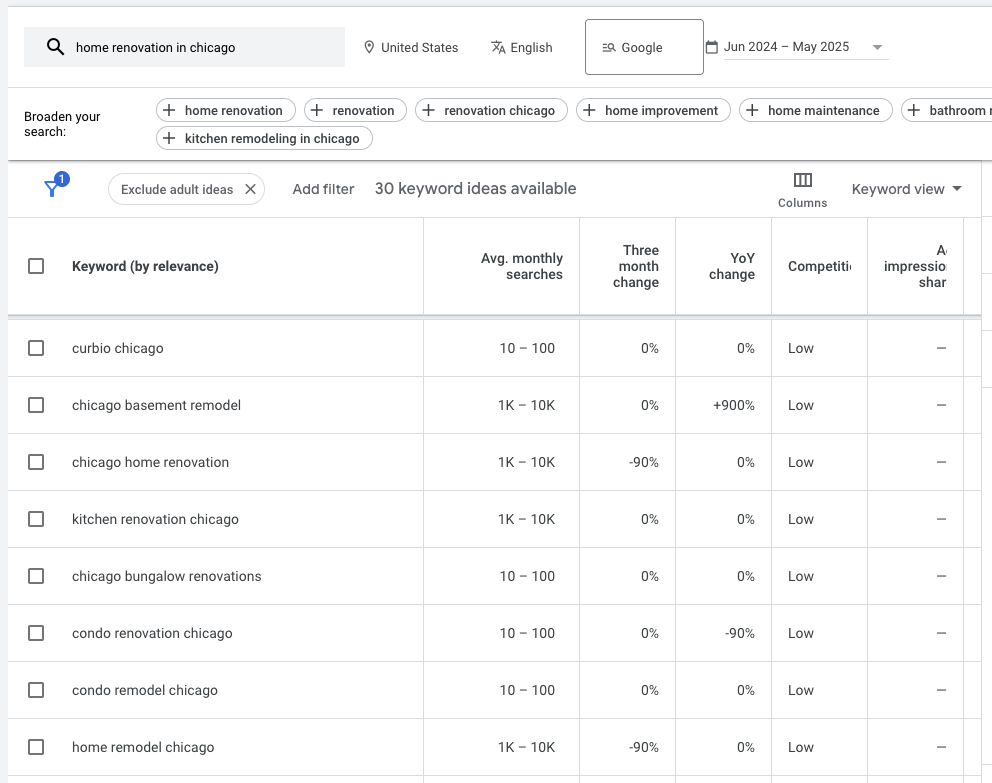
Once you’ve found the keywords you want to target, carefully and naturally include them in your copy. The keyword there is naturally. Keyword stuffing can actively hurt your rankings and make your site incredibly hard to read.
Beyond the copy itself, you can also insert your keywords in:
- Title tags: These are the clickable blue text in search results. It’s a good idea to add your primary keyword and location here.
- Meta descriptions: These are the snippets beneath the title tag. Make these short blurbs compelling and location-specific
- Internal links: Always connect location landing pages to relevant service pages, blog posts, or your locations hub.
- Image alt text and captions: Describe images with relevant keywords to improve accessibility and SEO.
Page Structure and Flow
Don’t think of a great local landing page as just a list of services with a city name dropped in. It should be a carefully structured experience that builds trust and makes it easy for someone to take action, all while sending the right signals to search engines.
Here’s what every strong local landing page should include:
- Hero Section: The hero section is a block of text that appears at the top of the page before the body below, usually with a compelling title and a subtitle beneath it. This section will be short and sweet and should include a high-priority keyword or two, especially in the geo-targeted H1 title.
- Unique Selling Proposition (USP): Sections like “Why [Your Company]?” could include a USP that helps you stand apart from local competitors, discussing the benefits that people won’t find when looking for your offerings elsewhere.
- CTAs: Don’t wait until the bottom of your page to add your CTAs. Strategically place CTAs throughout so visitors always have a clear next step. Some good places usually include above the fold, after your USP, and near your service listings.
- Name, Address, Phone Number (NAP) and Embedded Map: Be sure to make it easy for people to find you and reach out, with an accurate NAP and a conveniently embedded map that gives people directions to your location.
- Services: List what you offer, and tailor it to the location where applicable. If your services vary by area, make that clear. It demonstrates local relevance and supports keyword targeting.
- Team: Putting a face to a location builds trust. If you have staff specific to that location, introduce them. It’s a small touch that makes a big difference in how approachable your brand feels.
- Testimonials: Where appropriate, include testimonials from customers, ideally from the corresponding location you’re targeting. Brief quotes from a testimonials page or embedded Google reviews could convince more people to turn to you.
- Local Content: Reference local landmarks, community pain points, or neighborhood-specific details. This is what separates a page that feels local from one that just says it.
- FAQs: Address questions that are specific to this location or service area. FAQs also create natural opportunities to incorporate long-tail keywords and can help your page appear in featured snippets.
- Schema Markup: While not a visible page element, LocalBusiness schema structured data should be implemented on every location page. It gives search engines richer context about your business and improves your chances of appearing in enhanced search results.
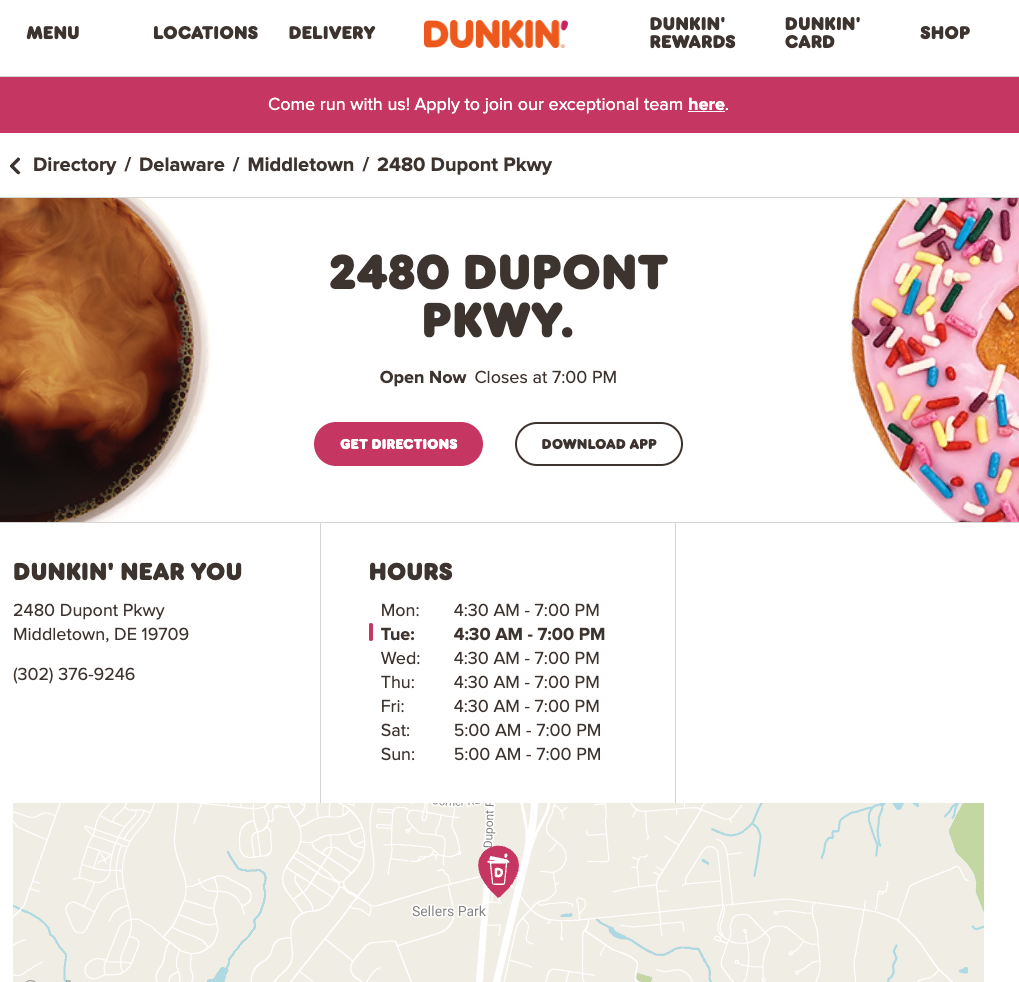
To give you some ideas of how to structure your page, let’s take a look at some local landing page SEO examples.
One is Dunkin’, which keeps things simple with an address, CTA buttons requesting directions and to download the dedicated app, business hours, and an embedded map.
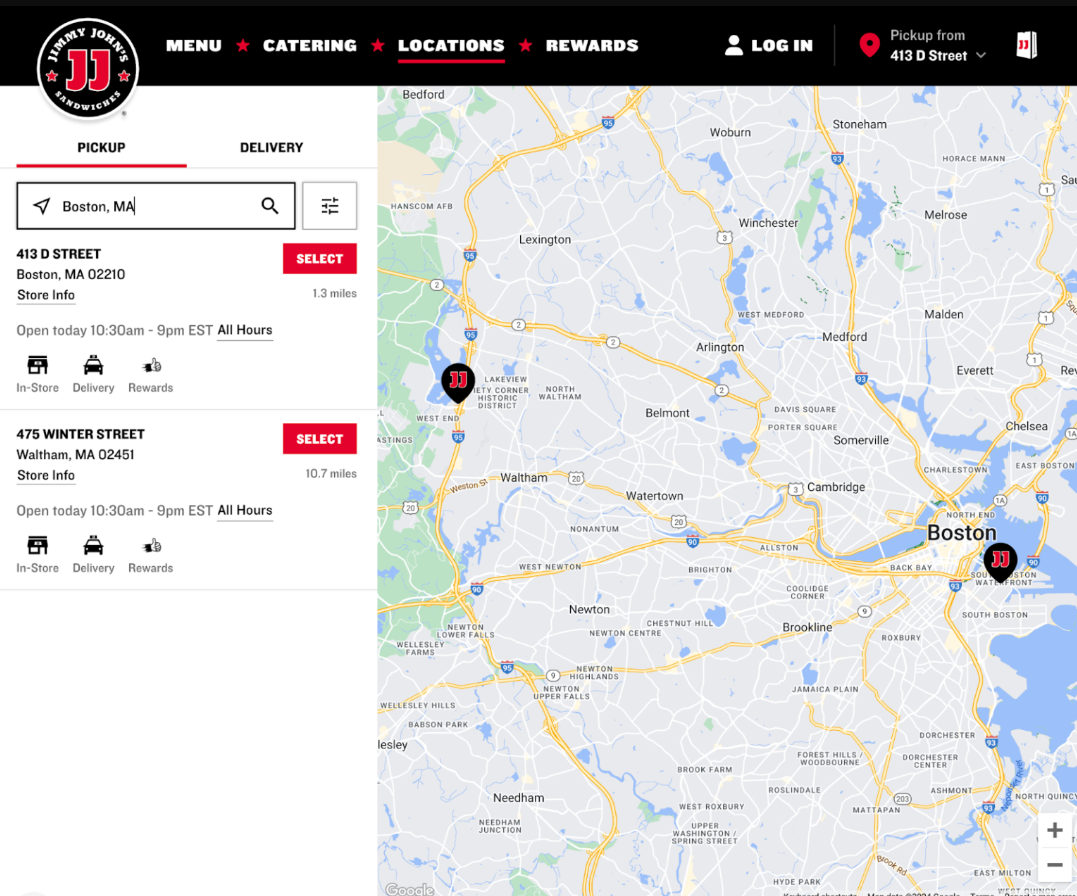
Jimmy John’s, meanwhile, uses proximity landing pages to help customers find specific locations in their area, with a bigger focus on its embedded map.
Local Content and Social Proof
Localized content and social proof are what make location-specific landing pages stand apart from generic ones. Reference nearby landmarks, speak to local pain points, and write like you actually know the community you’re serving. Something as simple as “located across from [local landmark]” immediately signals to a visitor that you’re a real, accessible presence in their area.
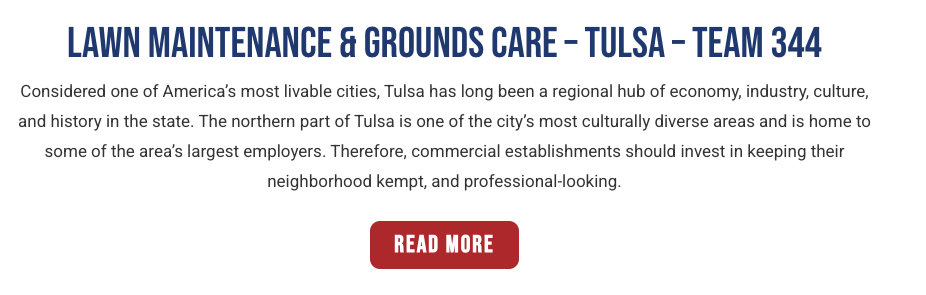
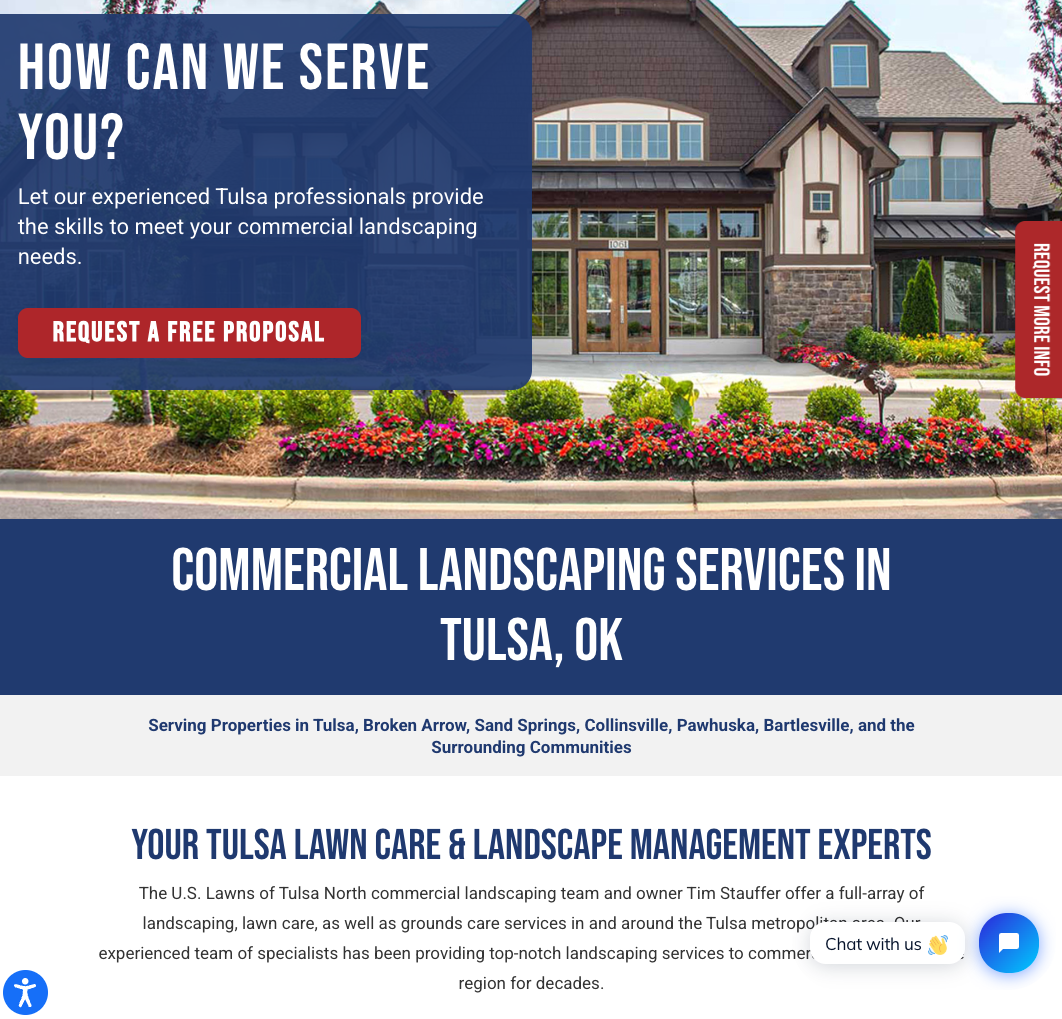
For instance, U.S. Lawns discusses the locations’ specific attributes that make it important for businesses to use its lawn care services.
Authentic visuals go a long way here too. Real photos of your location, your team, and your work in that specific area build trust more than any stock image ever could.
And never underestimate the power of reviews. Embedding Google reviews or featuring testimonials from local customers adds a layer of social proof that speaks directly to nearby searchers who are on the fence.
To make sure nothing slips through the cracks, here’s a practical checklist for every location page you build:
Content & Localization:
- Location-specific H1 with primary keyword and city/region
- Opening paragraph that speaks directly to the local audience
- References to local landmarks, neighborhoods, or community context
- Localized service descriptions (tailored to that area where applicable)
- Location-specific FAQs
Trust & Social Proof:
- Staff introductions with real photos
- Authentic images of the location, team, or local work
- Customer testimonials from that specific location
- Embedded Google reviews or review widget
- Trust badges, certifications, or awards relevant to the area
Conversion & Usability:
- Clear, prominent CTAs above the fold and throughout the page
- Accurate NAP (Name, Address, Phone Number)
- Embedded map with directions
- Click-to-call button for mobile users
- Mobile-optimized layout and fast load speed
Technical & SEO:
- Unique title tag with location keyword
- Meta description that is location-specific and compelling
- LocalBusiness schema markup implemented
- Internal links to relevant service pages and location hub
- Image alt text with relevant keywords
Mobile Optimization and UX Best Practices
The majority of local searches happen on mobile devices. Those searchers are looking for an answer fast. If your local landing page is slow to load or hard to navigate on a small screen, you’re going to lose people.
Here’s what a mobile-first local landing page should prioritize:
- Click-to-call button: Make your phone number tappable. A visitor who’s ready to call shouldn’t have to copy and paste a number.
- Sticky CTA: A persistent button or banner that stays visible as users scroll keeps the path to conversion always within reach.
- Short, simple forms: Long forms kill conversions on mobile. Ask for the minimum information: name, email, and one or two fields max.
- Tap-to-open maps: Your embedded map should open directly in Google Maps or Apple Maps with one tap, making it effortless to get directions.
- Fast load speed: Compress images, minimize unnecessary scripts, and aim for a load time under three seconds. Every second of delay increases bounce rate.
- Clear, visible hours: Don’t make someone hunt for your business hours. Display them prominently, especially above the fold or near your NAP.
- Visible reviews: Surface your best reviews early in the page experience, not buried at the bottom where mobile users rarely scroll.
- Minimal friction: Every extra click, form field, or pop-up is a reason someone leaves. Keep the path from landing to action as short as possible.
Beyond mobile specifics, good UX applies across all devices. Here’s a quick reference for what to do and what to avoid:
|
Do |
Don’t |
|
Use intuitive navigation |
Overwhelm readers with too much information |
|
Maintain consistent branding across all location landing pages |
Use complex forms with too many fields |
|
Incorporate a clear visual hierarchy |
Intrude with pop-ups |
|
Use A/B testing to refine page elements |
Auto-play videos or audio |
|
Optimize for accessibility |
Overlook accessibility requirements |
Schema, Structured Data, and Tracking
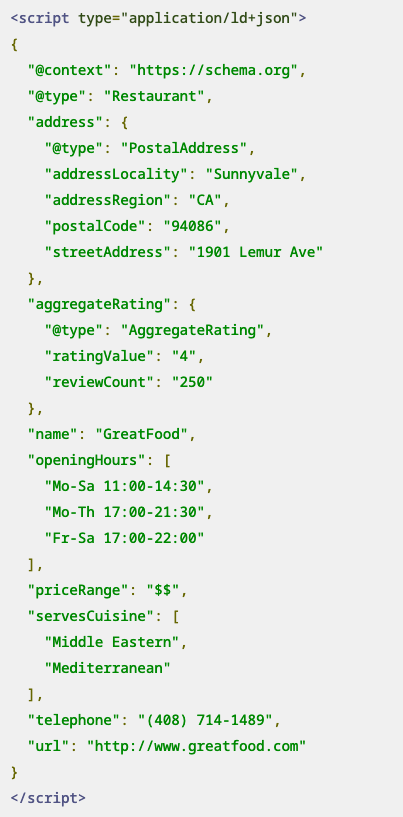
Another element to think about is schema markup or structured data. It’s one of those behind-the-scenes elements that doesn’t show up on the page itself but has a significant impact on how well your pages rank.
When you add structured data to your location pages, it gives search engines more context about your business. That makes it easier for Google to crawl, index, and display your content in different ways, including featured snippets, knowledge panels, and rich results.
For local landing pages, there are four schema types worth implementing:
- LocalBusiness: The most important one for location pages. Use JSON-LD format to mark up your business name, address, phone number, hours, and service area. This is what helps Google connect your page to local search queries and Map Pack results.
- FAQPage: If your location page includes an FAQ section, marking it up with FAQPage schema gives it a shot at appearing as an expanded rich result in search. This will give you some prime real estate on the page and, hopefully, drive more clicks.
- BreadcrumbList: Marking up your breadcrumb navigation helps search engines understand your site hierarchy. It also allows Google to display your page path directly in search results, which can improve both visibility and click-through rate.
- Review markup: If your page features customer reviews, Review or AggregateRating schema can display star ratings directly in search results. One important caution here: Google has strict eligibility guidelines around review markup. It should only be used on pages where reviews are a primary content element and not pulled from third-party platforms like Google or Yelp. They also should accurately reflect reviews written specifically about that location. Misusing review markup can result in a manual penalty, so when in doubt, verify against Google’s current rich result guidelines before implementing.
To measure the results of your efforts, set up conversion tracking for all form submissions, phone calls, and direction requests on every location page. Monitor these consistently so you can identify what’s working, catch underperforming pages early, and make data-driven updates over time.
Citations, Backlinks, and GBP Integration
Your business’s reputation also plays a big role in how it ranks online. Local citations and backlinks are two of the most important off-page factors for local SEO.
Local citations are any mention of your business’s NAP (Name, Address, Phone Number) across the web. Think directories like Yelp, Apple Maps, Bing Places, and industry-specific listings. For them to be helpful, your NAP needs to be consistent across every platform. If your address is formatted differently across directories, or your phone number is outdated on one platform, it creates conflicting signals for search engines and erodes trust with potential customers. Tools like Rallio can help you monitor and maintain NAP consistency across all listings, especially when details change across multiple locations.
For backlinks, focus on earning links from locally relevant sources. Examples here include local publications, community blogs, regional influencers, or local business associations. A backlink from a well-regarded local news site carries far more weight for local SEO than a generic link from an unrelated national directory. Guest posts, sponsorships, and local partnerships are all effective ways to build this kind of authority over time.
Connect Each Location Page to Its Google Business Profile
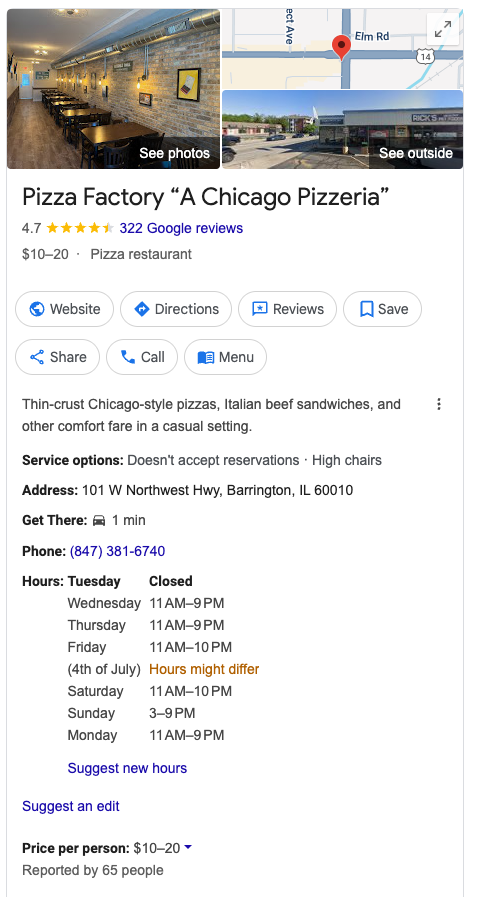
For multi-location brands, you cannot skip this step! Each individual location page should be directly linked to that location’s Google Business Profile.
The NAP, services listed, business hours, and website URL on your GBP should match exactly what’s on the corresponding location page. Mismatches between your GBP and your landing page create confusion and can quietly drag down your local rankings without an obvious cause.
When everything is in sync, it sends a consistent, authoritative signal across the web that tells Google exactly who you are, where you are, and who you serve.
Avoiding Pitfalls and Duplicate Content
Creating local landing pages is a smart strategy, as long as they are genuinely useful. When they’re created purely to capture search traffic without offering any real value to the reader, you’re risking a Google penalty that could tank your entire site’s visibility.
There are a couple of potential pitfalls to avoid with your geo-targeted landing pages, including:
- Thin Content: A page with a swapped city name, a paragraph of text, and a contact form isn’t a local landing page. Make sure each page has sufficient content to signal to Google that it is valuable to users. More content will also drive more engagement among visitors, subsequently sending more signals to Google. Every location page should have enough substantive, localized content to genuinely inform and engage a visitor.
- Duplicate Content: Mass-producing location pages with templated copy is one of the fastest ways to get penalized. If your Dallas page and your Austin page are 95% identical, Google sees them as duplicate content. Neither will rank and you risk getting a penalty. Each page needs to be meaningfully unique, with localized details, specific services, and content that reflects the character of that community.
- Creating Pages for Unserved Areas: Only create pages for locations you actively serve, or this could lead to confusion and even frustration among people who mistakenly believe they’re in your service area, hurting your brand reputation.
Location Pages vs. Doorway Pages
One of the more serious risks in local SEO is accidentally creating what Google calls doorway pages. These are pages that are designed primarily to rank for a keyword and funnel users elsewhere, rather than to serve as a genuine destination. Google explicitly penalizes these, and the line between a good location page and a doorway page is worth understanding clearly.
|
Good Location Page |
Doorway Page |
|
|
Content |
Unique, localized, and genuinely useful |
Templated copy with only the city name changed |
|
Purpose |
Serves the visitor with relevant local information |
Exists solely to capture search traffic |
|
User experience |
Answers questions, builds trust, drives action |
Redirects or funnels users to a generic page |
|
NAP & details |
Accurate, location-specific information |
Generic or missing location details |
|
Serves the real area |
Only created for areas actively served |
Created for any city to expand keyword reach |
The test is simple: if you removed the city name from the page, would it still offer something genuinely valuable to a visitor? If the answer is no, it needs more work before it goes live.
Continuous Optimization and KPI Tracking
Publishing your local landing pages is just the start. To get the most out of them, you need to consistently review performance, update content, and test new approaches to improve results over time.
Start by tracking the KPIs that matter most to your goals:
- Impressions: How often your pages are appearing in front of local searchers, giving you a baseline sense of visibility.
- Click-Through Rate (CTR): The percentage of people who see your page in search results and actually click through. A low CTR often signals that your title tag or meta description needs work.
- Conversion Rate: The percentage of visitors who complete a desired action, whether that’s filling out a form, calling your business, or booking an appointment.
- Assisted Conversions: Track which marketing channels contribute to conversions, even if they’re not the last touchpoint. This helps you understand the full picture of how your location pages fit into the customer journey.
Armed with this data, you can optimize your page by making ongoing updates that will improve your ranking or notify your audience of event mentions, reviews, or staff changes.
These updates signal to search engines that your pages are active and relevant, which can positively impact rankings over time. Pair that with ongoing A/B testing of headlines, CTAs, and page layouts to continually refine what resonates most with your local audiences.
Optimize Location Pages for AI Search and Local Discovery
Local SEO is evolving fast. AI-powered search experiences, like Google’s AI Overviews, are increasingly surfacing local business information in new ways, and your location pages need to be ready for it.
If you want to optimize for AI search and local discovery, here are a few things to focus on:
- Write clearly and conversationally: AI search tools tend to pull content that directly and clearly answers common questions. Structure your content so it answers who, what, where, when, and why in plain language.
- Keep your structured data current: AI search relies heavily on structured data to understand and surface business information. Make sure your LocalBusiness schema, GBP, and citations are all up to date and consistent.
- Build topical authority around each location: Supporting blog content, local guides, and area-specific resources that link back to your location pages signal to AI-powered search that your brand is a trusted local authority.
- Earn and respond to reviews consistently: Reviews are a major trust signal for both traditional and AI-driven local discovery. A steady stream of fresh, authentic reviews keeps your business relevant in local search ecosystems.
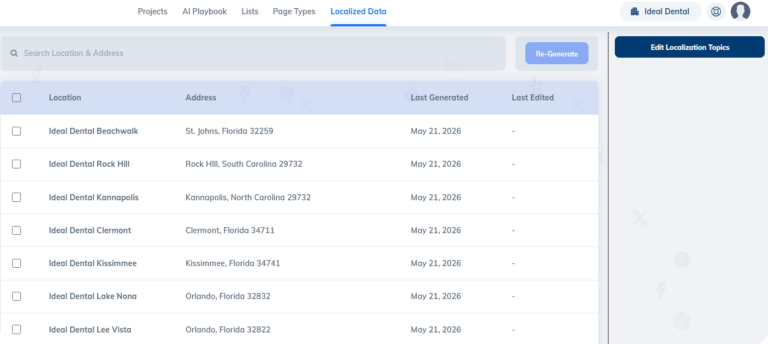
For multi-location brands, creating unique local content for dozens, or even hundreds, of locations can quickly become a bottleneck. AI-powered tools are making this process more scalable. For example, Rallio’s AI Local SEO Content solution helps businesses generate localized website content tailored to individual markets, making it easier to support location pages with relevant, location-specific copy while maintaining consistency across locations. When combined with strong local SEO fundamentals, tools like these can help brands expand their local content footprint without relying on duplicate templates.
FAQs
1. What should a location-specific landing page include?
There are many components these pages should include to connect with local audiences, such as keyword and geo-targeting headers, above-the-fold content, CTA buttons, images, reviews, embedded maps, a list of services, geo-specific mentions, and a unique selling proposition.
2. How many location pages should a business create?
Ideally, each location your business serves should include its own unique landing page to connect with local audiences. However, avoid creating pages for locations you do not currently serve, as this can mislead your target audience and waste your resources. Quality always wins over quantity here. Ten well-crafted, genuinely useful location pages will outperform a hundred thin, templated ones every time.
3. Do local landing pages improve SEO?
Well-optimized landing pages can improve search engine rankings, especially if they continually engage visitors and drive conversions. Using on-page optimization, backlinks, and other strategies, your pages could climb to the top of search results for target audiences over time.
4. How do I avoid duplicate content on location pages?
The key is to make each page meaningfully unique. Don’t use identical templates with the city name changed. Localize your service descriptions, reference area-specific details, feature reviews and team members from that location, and address pain points or questions unique to that community. If you’re managing a large number of location pages, build a content framework that provides structure and consistency while leaving enough room for each page to tell its own local story.
5. Can service-area businesses create location pages without a storefront?
Absolutely! Service-area businesses like plumbers, landscapers, cleaners, and consultants can and should create service-area pages for every city or region they actively serve. The key difference is transparency: don’t list a physical address you don’t have, and make sure your Google Business Profile is set up as a service-area business rather than a location-based one. Focus your page content on the services you offer in that area, local context, and clear CTAs. A well-optimized service-area page can rank just as effectively as a traditional location page when it’s built with genuine local relevance.
Improve Your Online Visibility with Rallio’s Help
Building location-specific landing pages is only one piece of the local marketing puzzle. Keeping your brand visible, consistent, and engaging across every local market also means showing up on social media.
That’s where Rallio comes in. Our AI-powered social media management platform helps franchise brands and multi-location businesses create, schedule, and manage localized social content at scale, without sacrificing the authenticity that local audiences expect.
Get started with Rallio today and change your online presence for good!

Tyler Phillips is a Creative Marketing Manager at Rallio | Powered by Ignite Visibility, with over seven years of experience in SaaS and social media marketing and more than sixteen years in online video production. Known for his creative thinking and innovative problem-solving, Tyler specializes in designing and executing strategic digital advertising and content marketing campaigns. His passion lies in bridging creativity and data—turning complex ideas into simple, impactful brand narratives that connect, engage, and inspire.